B. Canada, 1890–1914: A Changing Society · Canada, 1890–1914: A Changing SocietyCity Life and Working Conditions
B1 B3 B2About 55 minutes
Learning goals- I can describe how and why Canadian cities grew between 1890 and 1914, and what life was like in crowded neighbourhoods.
- I can describe working conditions in factories, mines and shops, including child labour.
- I can explain how workers organized unions and what changes they and reformers won.
- I can compare working and living conditions in 1890–1914 with today.
Words to know
urbanization
The growth of towns and cities as more people move there from the countryside or from other countries.
tenement
A crowded, run-down apartment building where many poor families rented small rooms.
child labour
Children doing paid work, often long hours in unsafe conditions, instead of going to school.
labour union
An organization of workers who join together to bargain with employers for better pay, hours and safety.
strike
When workers refuse to work until their employer agrees to some of their demands.
workers' compensation
Payments to workers injured on the job, without the worker having to sue the employer.
public health
Work by governments to keep whole communities healthy, such as clean water, sewers and vaccines.
Let's start with a question
How many hours a week do you spend at school? About 30. Now imagine you are 13 in 1905, working 10 hours a day, six days a week, in a noisy factory, for a few dollars. No sick days. No safety goggles. No school.
For many young people in Canada's growing cities, that was real. This lesson explores city life and work, and how people fought to change them.
Cities grow
In 1901, 37% of Canadians lived in urban areas. By 1911, it was 45%. Today, it is about 80%.
Why did cities grow?
- Factories and railways created jobs.
- Immigrants arrived, and many stayed in cities.
- Farm machines meant fewer workers were needed on farms, so young people moved to town.
- Electric streetcars let cities spread out.
Montreal was Canada's biggest city. Toronto grew fast. Winnipeg boomed as the "Gateway to the West", and Vancouver grew as a port and railway city.
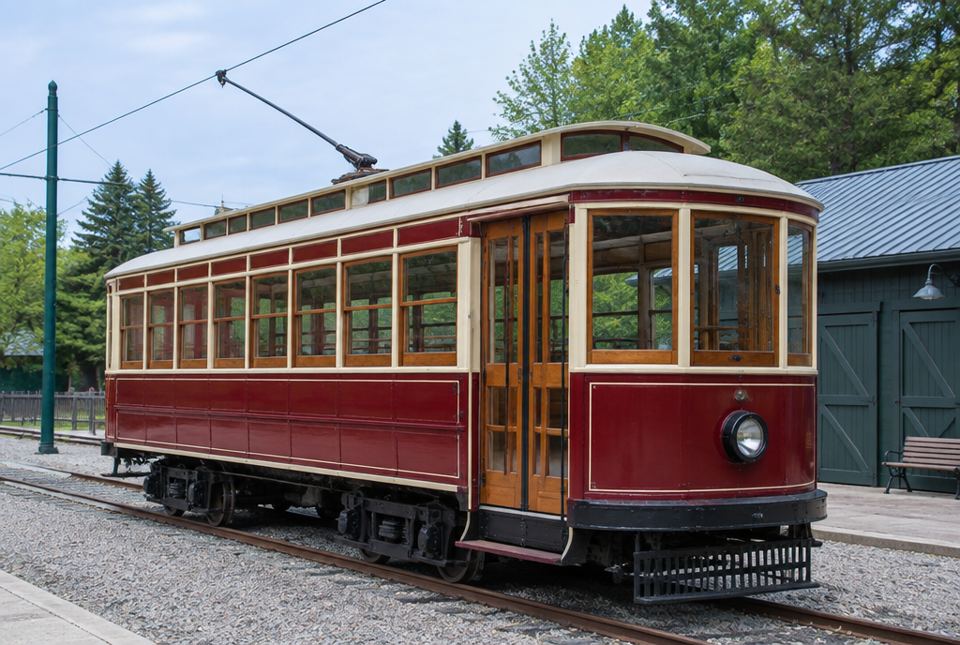 Electric streetcars like this restored one drew power from an overhead wire through the pole on the roof. They let workers live farther from factories, which helped cities spread out. AI-generated imageCanada became steadily more urban. (Statistics Canada)
Two sides of the city
Wealthy families built large houses in neighbourhoods with trees, running water and electric light, often with servants.
Working families often lived in crowded tenements or small houses near factories, with:
- several people sharing a room, and outdoor toilets in some areas;
- unsafe water and poor sewers, which spread diseases like typhoid;
- smoke and noise from factories.
In 1897, Montreal businessman Herbert Ames published a study, The City Below the Hill, showing the poor conditions in working-class Montreal. In Toronto, St. John's Ward ("the Ward"), where Toronto's City Hall stands today, was home to newcomers including Jewish, Italian, Chinese and Black families. They built businesses, places of worship and community groups there, even though officials often saw the area only as a "slum".
Over time, cities improved public health: cleaner water, sewers, milk inspection and public health nurses.
Work in factories, mines and shops
- Long hours: often 10 hours a day or more, six days a week.
- Low pay: women were usually paid much less than men for similar work, and children less still.
- Danger: machines had few guards; mines and railways were deadly. An injured worker usually got no pay and might lose the job.
- No safety net: no unemployment insurance, no public health care, no pensions.
Child labour: many children worked in factories, mills, mines, shops and on city streets selling newspapers. Ontario had factory laws setting minimum ages, but they were often ignored, and many kinds of work were not covered at all. An earlier federal inquiry (in the late 1880s) had heard of children being beaten and fined at work. Reformers pushed for children to be in school instead. In 1891, J.J. Kelso helped found Toronto's Children's Aid Society to protect children.
Workers organize
Workers joined labour unions to bargain together.
- In 1894, Labour Day (the first Monday in September) became a national holiday, honouring workers.
- In 1900, Ottawa created a Department of Labour; William Lyon Mackenzie King was its first deputy minister.
- In 1907, hundreds of women telephone operators at Bell in Toronto went on strike after the company tried to lengthen their hours. A government inquiry later criticized their working conditions.
- The Industrial Disputes Investigation Act of 1907 required some industries, like mines and railways, to go through an investigation before a strike or lockout could start.
- Coal miners on Vancouver Island went on a long, bitter strike from 1912 to 1914.
- In 1914, Ontario passed the Workmen's Compensation Act, so injured workers could get payments without suing their employer.
Unions faced obstacles: employers often fired union members, and many unions excluded women, Black, Asian and some immigrant workers. (Remember the whites-only railway union of 1908 from Black Canadians, 1890–1914.)
| Topic | 1890–1914 | Today in Ontario |
|---|
| Work week | Often 60 hours or more, six days | Usually around 40 hours; overtime rules |
| Children | Many worked instead of attending school | School required to age 18 (or graduation); strict limits on children's work |
| Injury at work | Often no pay; worker might have to sue | Workers' compensation (WSIB) |
| Health care | Pay the doctor yourself | Public health insurance (OHIP) |
| Unions | Small, often opposed, often excluded many workers | Legal right to join a union; human rights laws ban discrimination |
Worked exampleModelled example: Analysing working conditions as a historian
A newsboy in Toronto in 1905 sells papers from 5 a.m. to 8 a.m. and again after school until dark. How would a historian analyse this?
- Describe: a child working long hours outdoors, in all weather, selling newspapers, while also attending school (some newsboys did not attend at all).
- Explain the cause: families needed every bit of income; there was no safety net like child benefits; and laws did not cover street selling well.
- Consider perspectives: the family may have seen it as necessary and even normal; a reformer saw it as harmful to the child's health and education; the newspaper company saw cheap sales.
- Compare with today: Ontario children must attend school until 18 (or graduation), and child benefits and labour laws protect children. Change.
The newsboy's work was caused by poverty and a lack of protections. Comparing perspectives explains why it was common, and comparing with today shows how much reformers and workers changed.
Labour Day is history
Next Labour Day, remember that it became a national holiday in 1894 because workers had organized and marched for shorter hours and better conditions. The weekend, the eight-hour day and safety laws were all won by people pushing for change.
Just for funWhy did the bowling pins refuse to come to work?
They were on strike.
Hands-on activityClock out: a working day in 1905
You need: paper, a pencil and a clock or timer.
- Draw a 24-hour clock or a timeline from midnight to midnight.
- Colour in a factory worker's day in 1905: wake at 5:30, walk to work, work from 7:00 a.m. to 6:00 p.m. with a short lunch, walk home, chores, sleep.
- Draw your school day on a second timeline.
- Count: how many hours of free time does each have?
- Set a timer for five minutes and do one repetitive task (folding paper strips, sorting coins). Imagine doing it all day. Write two sentences about how you felt.
- Write one sentence on which change (shorter hours, school laws, safety rules) you think mattered most, and why.
Look for: accurate hour counts (7 to 6 is 11 hours, minus lunch) and a reasoned choice.
Your turn
1What share of Canadians lived in urban areas in 1901 and in 1911?
37% in 1901 and 45% in 1911.
2Give two reasons cities grew between 1890 and 1914.
Any two: factory and railway jobs; immigrants settling in cities; farm machines meant fewer farm workers needed; streetcars let cities spread out.
A crowded, run-down apartment building where poor families rented small rooms.
4Name two dangers or hardships of factory work in this period.
Any two: long hours (10+ a day, six days); low pay; unguarded machines; no pay if injured; no unemployment insurance.
5When did Labour Day become a national holiday?
6What did Ontario's 1914 Workmen's Compensation Act do?
Let injured workers get payments without suing their employer.
7Why did Bell telephone operators in Toronto strike in 1907?
The company tried to lengthen their hours without fair pay.
More practice: warm-up
1Which was Canada's largest city in this period?
2Which city was called the "Gateway to the West"?
When workers refuse to work until their employer agrees to some of their demands.
4Who helped found Toronto's Children's Aid Society in 1891?
5What disease spread through unsafe water?
More practice: on your own
1Why did many children work instead of going to school?
Their families were poor and needed the income; there was no safety net; and laws were weak or not enforced.
2Why might a factory owner in 1905 oppose a union?
A union could demand higher wages, shorter hours and safety changes, which would cost money and reduce the owner's control and profits.
3Why is Herbert Ames's The City Below the Hill (1897) a useful primary source? What might it leave out?
It gives evidence (an investigation) of conditions in working-class Montreal at the time. It may leave out the views of the residents themselves, since it was written by a wealthy businessman looking from the outside.
4How did some unions in this period treat women and racialized workers?
Many excluded them, such as the 1908 whites-only railway union, so these workers had less protection and had to organize separately.
5Give one continuity and one change in city life from 1910 to today.
Continuity: newcomers still often settle in big cities; some neighbourhoods still face crowded or costly housing. Change: clean water and sewers for nearly everyone; public health care; most Canadians now live in cities (about 80%).
Challenge
1Who brought about better working conditions: workers, reformers or governments? Argue using evidence.
A strong answer shows all three worked together: workers organized unions and strikes (Bell operators 1907, Vancouver Island miners); reformers like J.J. Kelso and Herbert Ames exposed problems; governments passed laws (Labour Day 1894, IDIA 1907, Ontario Workmen's Compensation Act 1914), often because of pressure from the first two. Pick one as most important and defend it.
2The Ward in Toronto was called a "slum" by officials. Explain why residents might describe it differently.
Officials saw crowding and poverty. Residents, including Jewish, Italian, Chinese and Black families, also saw their community: businesses, places of worship, mutual-aid groups, friends and family who spoke their language. The word "slum" reflects an outsider's perspective.
3Compare the situation of a 13-year-old factory worker in 1905 with a 13-year-old today in Ontario, using at least three points.
1905: might work 60 hours a week, little or no school, no injury protection, low pay, possibly unsafe machines. Today: must attend school, strict limits on paid work, safety laws, workers' compensation for any job, public health care. Shows major change won through reform and organizing.
Quiz
1. About what share of Canadians lived in urban areas in 1911?
2. Which was a common working condition in 1905?
3. What became a national holiday in 1894?
5. What did Ontario's Workmen's Compensation Act (1914) do?
6. Why did many children work in this period?
7. Which statement about unions in 1890–1914 is correct?
Big idea: This lesson covers urbanization and working conditions (B3), compares work and city life then and now (B1), and contrasts workers', reformers' and owners' perspectives (B2).
How to help: Share your own work experiences: hours, breaks, safety rules. Ask an older relative about their first job. If you're in Toronto, look at the plaques near City Hall about the Ward.
Sensitive points: Child labour is described without graphic detail. Some children have family members who work long hours today; keep the focus on how laws and organizing changed things, not on judging families.
Common difficulties: Assuming conditions improved by themselves (people organized for them); forgetting that unions themselves sometimes excluded people.