B. Active Living / C. Movement Competence · Active Living and Movement: Motivated, Fit, Safe and SkilfulSafety Check: Places, Gear and Weather
B3 A1.6 A1.1About 35 minutes
Learning goals- I can check a place, my gear and the weather before I am active.
- I can check that a helmet fits using the 2-V-1 check.
- I can explain how to stay safe in cold, heat, sun, storms and near ice and water.
- I can tell the difference between a smart challenge and an unsafe risk.
Words to know
hazard
Something that could cause an injury, like a hole in the field or a patch of ice.
risk
The chance that someone could get hurt.
protective gear
Equipment that protects your body, like a helmet, wrist guards or a life jacket.
frostbite
An injury when skin and the parts under it freeze. It happens most often to ears, nose, fingers and toes.
heat illness
Getting sick from being too hot, often when you don't drink enough water.
supervision
A grown-up watching and in charge, ready to help.
Remember from Grade 3
You learned to check the space, equipment, clothes, your body, people and rules before playing. You learned STOP, GET, STAY when someone is hurt.
This year you will become a safety checker. You will look closely at places, gear and weather, and decide how to make activities safer for you and others.
Check 1: The place
Before you play, look around for hazards:
- Ground: holes, rocks, tree roots, broken glass, puddles, ice patches.
- Things to bump into: fences, poles, benches, walls, parked bikes.
- Traffic: stay far from roads and driveways. A ball that rolls into the street stays there until a grown-up gets it.
- Other people: Is there enough space for your game?
If you find a hazard, move your game, mark the hazard (like putting a cone near a hole), or tell a grown-up.
Check 2: The gear
Protective gear must be the right size, in good shape and worn properly.
- A helmet for biking, scootering, skateboarding, skating, skiing, snowboarding and tobogganing.
- Wrist guards, knee and elbow pads for inline skating and skateboarding.
- A life jacket that fits, in boats and canoes.
- Running shoes with laces tied for most activities.
A helmet that has been in a crash should be replaced, even if you can't see damage.
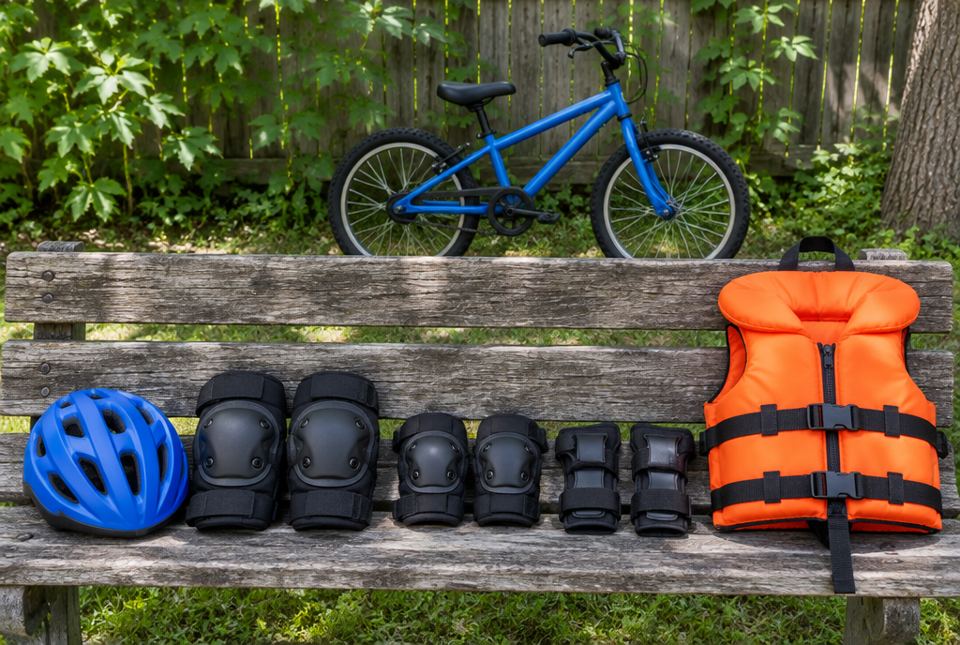 Gear only protects you if it is the right size, in good shape and worn properly. Which activities is each piece for? AI-generated imageThe 2-V-1 helmet check: the helmet sits 2 fingers above your eyebrows, the side straps make a V under each ear, and only 1 finger fits between the chin strap and your chin.
Check 3: The weather
Ontario has every kind of weather. Here is how to be active safely in each one.
| Weather | Stay safe by... |
|---|
| Cold and wind | Dress in layers, with a hat, mittens, a neck warmer and dry socks. Come inside if you are shivering a lot or your fingers, toes, ears or nose feel numb or look pale. Tell a grown-up: it could be the start of frostbite. |
| Hot and sunny | Drink water before, during and after. Play in the shade and take breaks. Wear a hat and sunscreen. If you feel dizzy, very tired, headachy or sick, stop, go to the shade, drink water and tell a grown-up: these can be signs of heat illness. |
| Thunderstorm | When thunder roars, go indoors. Leave fields, pools and beaches right away. Stay inside until 30 minutes after the last thunder. |
| Icy or snowy | Walk carefully. Sled on hills away from roads, trees and water, sit feet first, and walk up the side of the hill. Never go on a pond, lake or river unless a grown-up has checked the ice is safe. |
| Smoky or smoggy air | Grown-ups can check the air quality. On bad days, play indoors or do lighter activity. |
Smart challenge or unsafe risk?
Trying new things is part of being active! A smart challenge is a little scary or hard, but you have the skills, gear and supervision to do it. An unsafe risk is when the chance of a serious injury is high.
Ask yourself:
- Do I have the skills? (Can I already do the easier version?)
- Do I have the right gear?
- Is the place safe and is a grown-up nearby?
- Could this hurt someone else?
If any answer is no, change the plan to make it safer, or choose something else. It is okay to say "No, thanks" when friends dare you to do something unsafe.
Worked exampleLet's do a 2-V-1 helmet check
Arjun puts on his bike helmet. It is tipped back so his whole forehead shows. The chin strap is so loose that his whole hand fits under it. Fix it.
- 2: The front of the helmet should sit about 2 fingers above his eyebrows. Tip it forward so it covers his forehead.
- V: Adjust the side straps so they make a V just under each ear.
- 1: Tighten the chin strap until only 1 finger fits under it.
- Final test: Open his mouth wide. The helmet should press down a little on his head. Shake his head: the helmet should not slide around.
Now the helmet protects his forehead, stays in place, and is snug. A helmet tipped back leaves the front of the head unprotected.
Worked exampleLet's plan a safe sledding afternoon
Chloe and her brother want to go sledding on a hill. It is −10 °C and windy. The hill ends at a parking lot. What should they check and change?
- Place: a hill that ends at a parking lot is a hazard (cars). Choose a hill with a long, flat, clear run-out, away from roads, trees and water.
- Gear: wear helmets (a ski or snowboard helmet is best for winter). Check the sled is not cracked.
- Weather: cold and windy. Dress in layers, hat under the helmet or a helmet liner, mittens, neck warmer. Take warm-up breaks inside.
- Rules: go down one at a time, sit feet first, walk up the side, and move out of the way fast at the bottom.
- Supervision: a grown-up comes along.
They switch to a safer hill, wear helmets and layers, follow sledding rules, and go with a grown-up.
Hands-on activitySafety checker walk
You need: paper, a pencil, a bike or winter helmet (if you have one) and a grown-up.
- Helmet check: Put on your helmet and do the 2-V-1 check with your grown-up. Fix anything that is wrong.
- Place check: Walk to your yard or local park with your grown-up. List 4 hazards you see. For each one, write how to make it safer.
- Weather check: Look at today's weather. Write what you would wear and bring to play outside for 30 minutes today.
- Challenge or risk? Think of something you would like to try (like a bigger hill or the high monkey bars). Answer the 4 questions. Is it a smart challenge right now?
Safety: Stay with your grown-up near roads and water.
Just for funWhy do cyclists love their helmets?
Because a helmet always gives you a head start!
Your turn
1What does the 2-V-1 helmet check mean?
2 fingers above the eyebrows, straps make a V under each ear, 1 finger under the chin strap.
2Name two hazards you might find on a playing field.
Any two: holes, rocks, tree roots, broken glass, puddles, ice, goalposts or benches nearby, other people too close.
3What should you do when you hear thunder during a soccer game?
Stop and go indoors right away. When thunder roars, go indoors.
4Name three things to do to stay safe in the heat.
Any three: drink water, play in the shade, take breaks, wear a hat, wear sunscreen, play in the cooler part of the day.
5Your fingers feel numb and look pale after an hour of skating outside. What should you do?
Go inside, tell a grown-up, and warm up slowly. It could be the start of frostbite.
6What is the difference between a smart challenge and an unsafe risk?
A smart challenge is hard but you have the skills, gear and supervision. An unsafe risk has a high chance of serious injury.
7Do it and check: Do the 2-V-1 check on a helmet.
Look for: helmet level on the forehead, 2 fingers above the eyebrows, straps in a V under the ears, chin strap snug with just 1 finger under it, helmet doesn't slide when you shake your head.
More practice: warm-up
Something that could cause an injury.
2Name one activity that needs a helmet.
Any: biking, scootering, skateboarding, skating, skiing, snowboarding, tobogganing or sledding.
3Which body parts get frostbite most often?
Ears, nose, fingers and toes.
4When sledding, do you walk back up the middle of the hill or the side?
The side, away from people sliding down.
5True or false: you can skate on any frozen pond if it looks solid.
False. Only go on ice that a grown-up has checked is safe, or on a maintained rink.
More practice: on your own
1Your scooter helmet has a big crack from last summer. Should you use it? Explain.
No. A cracked or crashed helmet may not protect your head. Get a new one that fits.
2Friends want to play catch next to a busy street. What do you suggest, and why?
Move to a park or backyard away from traffic. A ball could roll into the street and someone might chase it into cars.
3It's a hot July afternoon. Plan a safe 30-minute play time.
Example: play in the shade or in the cooler morning, bring a water bottle and drink often, wear a hat and sunscreen, take breaks, and stop if anyone feels dizzy or sick.
4Name two pieces of protective gear for inline skating.
Any two: helmet, wrist guards, knee pads, elbow pads.
5Why is it good to dress in layers in winter?
Layers trap warm air, and you can take one off if you get hot and sweaty or add one if you get cold. Staying dry helps you stay warm.
Challenge
1Malik's friends dare him to sled down a steep hill that ends at a frozen creek. Use the 4 questions to decide, and say what he could do instead.
Skills? Maybe. Gear? Maybe. Safe place? No: the hill ends at a creek, and the ice may not be safe. Could it hurt others? Possibly. So it is an unsafe risk. He can say "No, thanks," and suggest a different hill with a clear, flat run-out, with a grown-up nearby.
2Your class is going on a fall bike ride on a trail. Make a safety checklist with at least one idea for the place, the gear, the weather and the people.
Example: Place: stay on the trail, watch for wet leaves, roots and walkers; ride single file. Gear: helmet (2-V-1), bike brakes and tires checked, bright clothing. Weather: layers, rain jacket, water bottle. People: a grown-up leads and one rides at the back; ring a bell to pass. Look for all four parts.
3Why is thinking about other people's safety part of being safe?
Your actions can hurt others (a ball thrown without looking, a stick swung too high, sledding into someone). Checking that everyone has space and follows the rules keeps the whole group safe. Looking out for others is also a way to show you care.
Quiz
1. In the 2-V-1 helmet check, how many fingers should fit under the chin strap?
2. You hear thunder during an outdoor game. What should you do?
3. Which is the safest sledding hill?
4. Which is a sign of heat illness?
5. When is it okay to go on the ice of a pond?
6. What makes something a smart challenge?
Big idea: Grade 4 students demonstrate behaviours and apply procedures that maximize their safety and the safety of others during physical activity: checking places for hazards, using protective gear correctly, and adapting to weather and environmental conditions. They also learn to judge a smart challenge versus an unsafe risk.
How to help at home:
- Do the 2-V-1 helmet check together each season (heads grow!). Replace any helmet that has been in a crash.
- Before outings, ask your child to do the safety check out loud: place, gear, weather, people.
- Practise saying "No, thanks" to an unsafe dare.
Common difficulties:
- Helmets worn tipped back or with loose straps. This is very common; check every time.
- Not noticing cold or thirst while having fun. Build in breaks for water and warming up.
- Thinking all risk is bad. Some challenge is healthy; the goal is to manage risk, not avoid all activity.
Safety notes: Never let children go onto ponds, lakes or rivers unless a responsible adult has confirmed the ice is safe; ice near moving water, inlets and outlets is especially dangerous. Children should swim only with an adult watching and wear a fitted life jacket in boats. Follow local heat, cold and air-quality alerts. A child with frostbite or signs of heat illness needs an adult's help right away; seek medical care if symptoms are serious.
Social-emotional learning: Judging risks and planning safer choices builds critical thinking; noticing feelings like fear or excitement before a challenge builds emotional awareness.