Strand A: Foundations of Language and Mathematics · Talking, Listening, Reading and WritingReading Short Sentences Smoothly
A2.6 A2.5 A3.2About 20 minutes
Learning goals- I can read a short sentence by sounding out words and knowing some words by heart.
- I can read a sentence smoothly, like I am talking.
- I know a sentence starts with an uppercase letter and ends with a period.
- I can read a sentence again to make it smoother.
Words to know
sentence
A group of words that tells a whole idea. It starts with an uppercase letter and ends with a period.
period
The dot at the end of a sentence. It means stop, the idea is done.
heart word
A word we see so often that we learn it by heart, like the or I.
smooth reading
Reading the words one after another, like talking, without long stops.
From words to sentences
(Grown-up: read aloud. Print each practice sentence in big, clear letters on paper so your child can point under the words.)
You can read words like cat, sun and dog. Now let's read whole sentences!
A sentence tells a whole idea: The cat is fat. It starts with an uppercase letter and ends with a period.
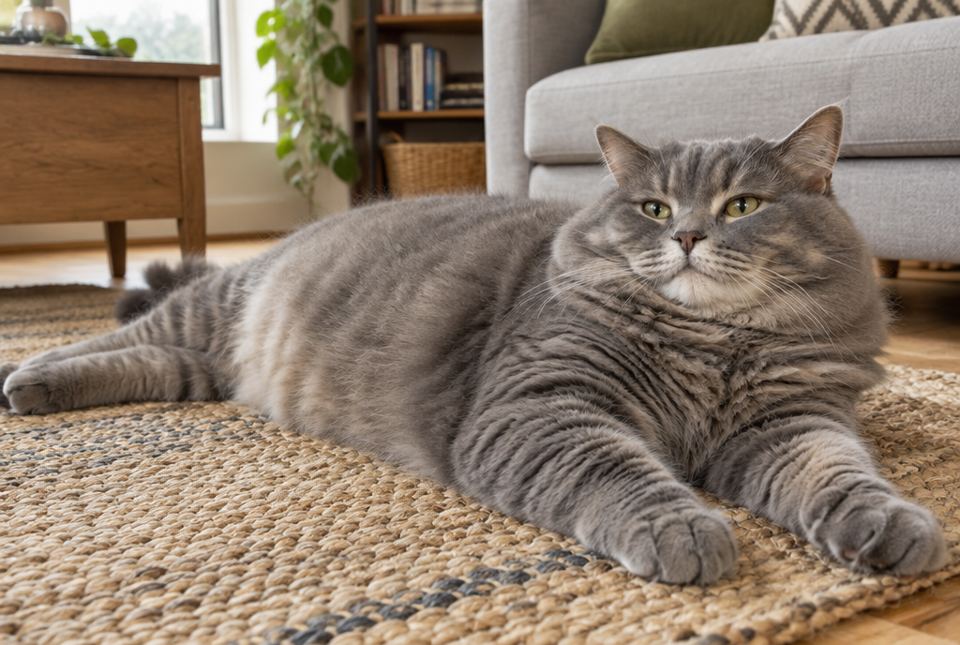 The cat is fat. Read the sentence smoothly, then point to the cat! AI-generated imageThe parts of a sentence: it starts with an uppercase letter, has spaces between words, and ends with a period. The and is are heart words.
Heart words
Some words are in almost every book. We learn them by heart, so we can read them in a snap without sounding them out.
Here are some heart words: I, a, the, is, my, see, to.
Some heart words, like the, don't follow the letter sounds we have learned. That's why we learn them by heart.
| Heart word | In a sentence |
|---|
| I | I can hop. |
| a | I see a cat. |
| the | The dog is big. |
| is | The sun is hot. |
| my | My hat is red. |
| see | I see a pig. |
Worked exampleLet's read a sentence
Read this sentence: The cat is fat.
- Find the uppercase letter. That's where the sentence starts: The. It's a heart word, so we say it in a snap: the.
- Next word: cat. Tap, slide, say: /c/ /a/ /t/ → cat.
- Next word: is. Heart word: is.
- Next word: fat. Tap, slide, say: /f/ /a/ /t/ → fat. Then we see the period. Stop!
- Now read it again, sliding your finger under the words, like you are talking: The cat is fat.
The cat is fat. We sounded out cat and fat, knew The and is by heart, and read it again smoothly.
Bumpy, better, smooth
The first time you read a sentence, it may sound bumpy: The... c-a-t... is... f-a-t.
That's okay! Real readers read it again. The second time is better. The third time is smooth, like you are talking to a friend: The cat is fat.
Smooth reading helps you understand the sentence.
Worked exampleLet's read a sentence two times
Read this sentence two times: I can hop.
- First read (tap): I (heart word)... c-a-n, can... h-o-p, hop. Stop at the period.
- Second read (glide): slide your finger under all the words and say them together: I can hop.
- Check: Does it make sense? Yes! Show me: hop like a bunny 🐇.
I can hop. Tap the first time, glide the second time, and check that it makes sense.
Tap, then glide
Tap a finger under each word the first time. Glide your finger under the whole line the next time. Stop at the period, then take a little breath before the next sentence.
Just for funWhy did the period go to bed early?
It knew the sentence was done! 😴
Hands-on activitySentence strips
You need: paper strips, a marker and scissors.
- A grown-up writes one sentence on each strip: I can sit. / The dog is big. / I see a cat. / Mom can run.
- Your child reads each strip three times: bumpy, better, smooth.
- Act it out! After reading I can sit, sit down. After Mom can run, Mom runs in place!
- Mix and fix: cut one strip into words. Mix them up. Your child puts them back in order, with the uppercase word first and the period at the end, then reads it smoothly.
Your turn
I can sit. I is a heart word. Can and sit sound out: c-a-n, s-i-t.
The dog is big. The and is are heart words. d-o-g, b-i-g.
I see a cat. Look for smooth reading the second time.
4How many words are in The pig is big.?
4 words: The, pig, is, big.
5In The sun is hot., point to where the sentence starts and where it stops.
It starts at the uppercase T in The. It stops at the period after hot.
6Read I can hop. two times: tap the first time, glide the second time.
I can hop. Look for the second reading to be smoother, with no long stops between words.
7In The sun is hot., which words did you sound out, and which did you know by heart?
Sounded out: sun and hot. Heart words: The and is.
More practice: warm-up
4What is the dot at the end of a sentence called?
the. We know it by heart.
More practice: on your own
The bug is red. b-u-g, r-e-d.
Dad can run. D-a-d, c-a-n, r-u-n. Dad starts with an uppercase D because it starts the sentence.
I see a big hat. 5 words. I, see and a are heart words.
4Listen to two readers. Reader 1: The... d-o-g... is... w-e-t. Reader 2: The dog is wet. Who read smoothly?
Reader 2. Reader 1 was still sounding out. Reading it again helps it get smooth.
5Put these words in order to make a sentence: sit. / I / can
I can sit. I goes first (uppercase), and sit. goes last because it has the period.
Challenge
1Read: The cat sat on a log.
The cat sat on a log. 6 words. c-a-t, s-a-t, o-n, l-o-g. Look for smooth reading after one or two tries.
2Read two sentences: The pig is in the mud. It is fun. Where do you stop?
The pig is in the mud. It is fun. Stop at each period: after mud and after fun. That's 2 sentences.
3Write the sentence I can run. Remember the uppercase letter, the spaces and the period.
I can run. Look for: uppercase I, a space between words, c-a-n and r-u-n spelled with their sounds, and a period at the end.
Quiz
1. Read: The dog is wet. Which picture matches?
3. What do we do when we get to a period?
4. How many words are in I can see a dog.?
5. Which word is a heart word we learn by heart?
What the curriculum asks: The Kindergarten Curriculum (2026) asks children to read short, simple sentences accurately and smoothly (A2.6), using phonics to read simple words (A2.5) and knowing how words, sentences and punctuation work (A3.2).
How to help at home:
- Use sentences your child can actually decode: short words with letters they know, plus a few heart words (I, a, the, is, my, see, to). Many libraries and schools have "decodable" books made for this.
- Expect three reads: bumpy, better, smooth. Rereading is how smooth reading grows.
- Echo reading: you read a sentence smoothly while pointing, then your child reads it back the same way.
- Ask a quick question after reading ("Who is big?") so your child knows reading is about meaning.
Common difficulties:
- Guessing a word from its first letter or the picture. Gently say: "Look at all the letters," and have them tap, slide, say.
- Choppy, word-by-word reading. Normal at first. Model smooth reading and have them reread.
- Losing their place. Let them point under each word, or slide a bookmark under the line.
- Forgetting heart words. Write 3 or 4 on cards and play quick games ("Find the!"). Add new ones slowly.