A. New France and British North America, 1713–1800 · New France and British North America, 1713 to 1800Nations, Allies and Partners: First Nations, Métis and Inuit, 1713 to 1760
A1 A3About 50 minutes
Learning goals- I can explain why First Nations were powerful, independent allies of France and Britain in this period.
- I can describe the Peace and Friendship Treaties and why they still matter today.
- I can describe how Métis communities grew around the Great Lakes fur trade.
- I can describe Inuit life and contact with Europeans in Labrador in the 1700s.
Words to know
alliance
An agreement between nations to help and support each other, often in trade and war.
Peace and Friendship Treaties
A series of treaties (1725 to 1779) between Britain and the Mi'kmaq, Wolastoqiyik and Peskotomuhkati. They were about peace and trade, not giving up land.
sovereignty
The right of a nation to govern itself.
Métis
A distinct Indigenous people whose culture grew from the families of First Nations women and European (often French or Scottish) fur traders.
Inuit
Indigenous people of the Arctic, including the Labrador coast. The singular is Inuk.
treaty rights
Rights that come from a treaty and are still protected by law today.
Remember from Grade 5
In Grade 5 you learned that First Nations were partners in the fur trade, that the Great Peace of Montreal (1701) brought dozens of Nations together with the French, and that the Métis were beginning to form as a new people. Now let's see what happened next.
Who held the power?
In many history books, the 1700s look like a contest between France and Britain. But in North America, neither empire could do much without First Nations.
- First Nations knew the land, the waterways and how to survive the winters.
- They supplied the furs that made the trade profitable, and the canoes, food and guides that traders needed.
- In war, First Nations warriors were often the deciding force.
First Nations were independent nations. They made alliances with France or Britain when it helped their own people, and they expected their allies to show respect with councils, gifts and fair trade. European officials sometimes called them "subjects", but First Nations leaders said clearly that they were allies, not subjects.
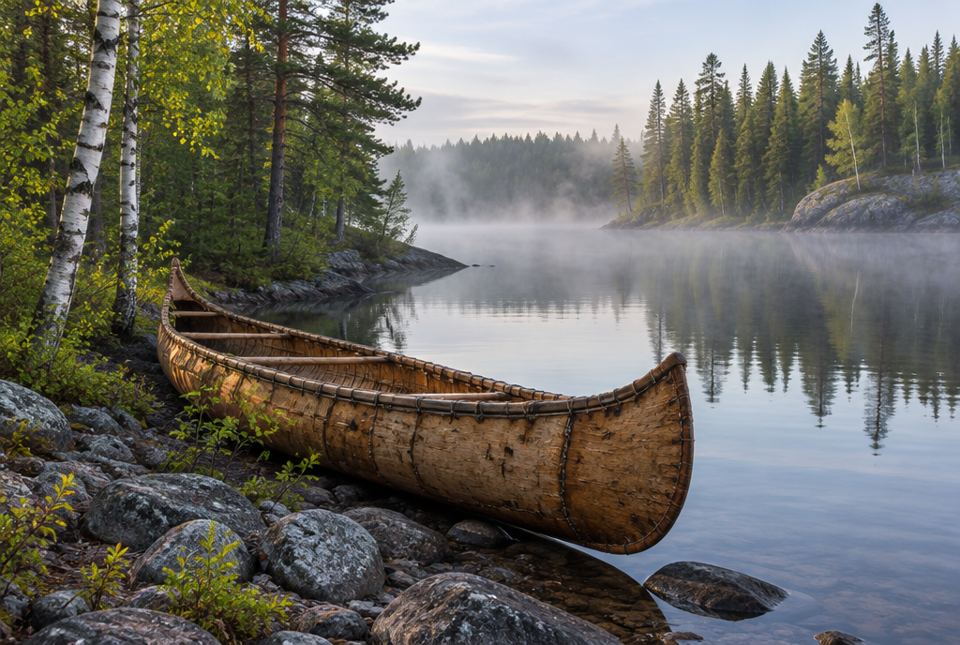 Light, strong birchbark canoes and deep knowledge of the waterways are part of why European traders and armies depended on First Nations partners. AI-generated imageNeither France nor Britain could do much without First Nations. What each side gave and expected shows why First Nations called themselves allies, not subjects.
| Nations (some examples) | Where | Relationship in 1713 to 1760 |
|---|
| Mi'kmaq, Wolastoqiyik (Maliseet), Peskotomuhkati (Passamaquoddy) | Atlantic region (Mi'kma'ki and Wolastokuk) | Allies of the French and the Acadians; made Peace and Friendship Treaties with Britain |
| Wendat, Mohawk, Abenaki and others in communities near Quebec and Montreal (e.g. Wendake, Kahnawake, Kanesatake, Odanak) | St. Lawrence valley | Close allies of the French |
| Anishinaabe Nations (Odawa, Ojibwe, Potawatomi, and others) | Great Lakes | Trading partners and allies of the French |
| Haudenosaunee Confederacy (Six Nations) | South of Lake Ontario | Tried to stay neutral after 1701; had a long alliance with Britain called the Covenant Chain |
| Cree and others | Around Hudson Bay | Traded with the Hudson's Bay Company |
The Peace and Friendship Treaties
After 1713, Britain claimed Nova Scotia, but the Mi'kmaq, Wolastoqiyik and Peskotomuhkati had never agreed to give up their lands. Between 1725 and 1779, they made a series of Peace and Friendship Treaties with the British.
- These treaties promised peace and set rules for trade.
- They did not say that the Nations gave up their land.
These treaties still matter. In 1999, in the Marshall decision, the Supreme Court of Canada ruled that treaties of 1760 and 1761 protect the right of Mi'kmaq and Wolastoqiyik people to fish, hunt and gather to earn a moderate livelihood. Mi'kmaq and Wolastoqiyik communities continue to work to have these rights respected.
Métis communities around the Great Lakes
In the fur trade, many French traders married First Nations women. The women's skills and family connections were essential: they prepared food, made clothing and snowshoes, translated, and linked traders to their Nations.
Their children and grandchildren grew into Métis families with their own way of life, mixing First Nations and French traditions, and later their own culture and identity. Métis communities grew at fur trade centres such as Sault Ste. Marie, Michilimackinac and Detroit.
Today the Métis are a distinct Indigenous people with rights recognized in Canada's Constitution. In 2003, the Supreme Court of Canada's Powley decision confirmed the harvesting rights of the Métis community around Sault Ste. Marie, a community whose roots go back to this period.
Inuit in the 1700s
Inuit lived across the Arctic, travelling by qajaq (kayak), umiak and dog sled, and hunting seals, whales and caribou. Most Inuit had little contact with Europeans in this period.
On the Labrador coast, Inuit met European fishers and traders. Sometimes they traded; sometimes there was conflict. In 1771, Moravian missionaries from Europe set up a mission and trading post at Nain. Today Nain is a community in Nunatsiavut, the Inuit region of Labrador.
Just for funRiddle: I have a mouth but never eat, a bed but never sleep, and in the 1700s I was one of the busiest highways on the continent. What am I?
A river! Canoe routes along rivers and lakes carried people, news and furs across North America.
Worked exampleLet's look at a perspective
Read this idea, which First Nations leaders expressed many times in councils in the 1700s (summarized here in modern words, not an exact quotation): "The French and British may fight over who is king, but they cannot give away our land, because it was never theirs."
What does this tell us about how First Nations saw treaties like the Treaty of Utrecht?
- Identify the perspective: this is the view of First Nations leaders, not of European officials.
- Main idea: First Nations saw themselves as owners and governors of their lands (sovereignty).
- Connect: in 1713, France and Britain traded land in a treaty that First Nations did not sign. From this perspective, that treaty could not take away their land.
- Significance: this disagreement about land is a key cause of later conflicts, and of land claims today.
First Nations saw European treaties made without them as having no power over their land. They saw themselves as independent nations and allies.
Words matter
Use the names Nations use for themselves when you can: Wendat (not only "Huron"), Haudenosaunee (not only "Iroquois"), Anishinaabe, Mi'kmaq, Wolastoqiyik. And remember: these are living Nations. Talk about them in the present tense when you mean today.
Hands-on activityMake a wampum-style agreement
You need: paper, a pencil, and two colours of beads, buttons or pencil crayons. (Small beads are a choking risk: keep them away from little children.)
Wampum belts were made of white and purple shell beads. Patterns recorded agreements so they could be remembered and "read" at councils.
- With a family member, agree on a simple promise, e.g. we will share the computer fairly.
- Design a pattern that shows it: two figures holding hands for friendship, two parallel lines for two partners travelling side by side, etc.
- Draw or lay out your pattern.
- Explain your pattern aloud. This is how the agreement is remembered.
Remember: real wampum belts are sacred and important records for many First Nations. Your design is only a way to understand how they work, not a copy of a real one.
Your turn
1Why could neither France nor Britain do much in North America without First Nations?
First Nations knew the land and waterways, supplied furs, food and guides, and their warriors were often decisive in war.
2Did First Nations see themselves as subjects of the French king? Explain.
No. They saw themselves as independent nations and allies who chose partners to help their own people.
3What were the Peace and Friendship Treaties about?
Peace and trade between Britain and the Mi'kmaq, Wolastoqiyik and Peskotomuhkati. They did not give up land.
4What did the Marshall decision (1999) say?
Treaties of 1760 and 1761 protect the Mi'kmaq and Wolastoqiyik right to fish, hunt and gather to earn a moderate livelihood.
5Name one Great Lakes fur trade centre where Métis communities grew.
Sault Ste. Marie, Michilimackinac or Detroit.
6What happened at Nain, Labrador, in 1771?
Moravian missionaries set up a mission and trading post. Nain is now an Inuit community in Nunatsiavut.
More practice: warm-up
An agreement between nations to help and support each other.
2Name two Nations in the Atlantic region.
Any two: Mi'kmaq, Wolastoqiyik (Maliseet), Peskotomuhkati (Passamaquoddy).
3What is the name for the alliance between the Haudenosaunee and Britain?
4Who traded with the Hudson's Bay Company around Hudson Bay?
The Cree (and other Nations).
5What is the singular of Inuit?
More practice: on your own
1Why were First Nations women so important in the fur trade?
They prepared food, made clothing and snowshoes, translated, and connected traders to their Nations through family ties.
2How do the Peace and Friendship Treaties show continuity between the 1700s and today?
They were made in the 1700s and are still legally protected today (for example, in the Marshall decision of 1999).
3Why do you think the Haudenosaunee tried to stay neutral between France and Britain after 1701?
Staying neutral let them trade with both sides, avoid costly wars, and protect their own power and land.
4Why is it a mistake to colour all of North America "French" or "British" on a map of 1750?
Most of the land was controlled by First Nations. European colonies were small areas along rivers and coasts.
5What did the Powley decision (2003) confirm?
The harvesting rights of the Métis community around Sault Ste. Marie.
Challenge
1Explain how the fur trade both helped and harmed First Nations in this period.
Helped: new goods (metal tools, kettles, cloth), wealth and powerful alliances. Harmed: European diseases, wars between rival alliances, and growing dependence on trade goods. (A good answer gives at least one of each.)
2A historian writes, "In the 1700s, France and Britain needed First Nations more than First Nations needed them." Do you agree? Give evidence.
Many would agree: the empires depended on First Nations for furs, survival knowledge, guides and warriors, while First Nations had their own economies and could choose partners. Others might say First Nations also came to rely on trade goods and allies. A strong answer takes a side and uses evidence.
3How does knowing about Métis communities like Sault Ste. Marie in the 1700s help explain Métis rights today?
Métis rights depend partly on showing a historic Métis community that has continued to today. The roots of the Sault Ste. Marie community in the fur trade era helped the courts recognize those rights in Powley (2003).
Quiz
1. How did most First Nations see their relationship with France or Britain in the 1700s?
2. The Peace and Friendship Treaties were made between Britain and which Nations?
3. What did the Peace and Friendship Treaties not include?
4. Where did Métis communities grow in the 1700s?
5. What happened in Nain, Labrador, in 1771?
6. Why is the Marshall decision (1999) significant?
Big idea: First Nations were powerful, independent nations and allies in this period, not passive bystanders; the Peace and Friendship Treaties, Métis communities and Inuit history from the 1700s still shape rights and relationships today (A1, A3).
How to help at home:
- Find out whose traditional territory you live on, and whether a treaty covers it (your municipality or school board website often has a land acknowledgement).
- Look at the websites of a Nation or organization mentioned here (for example the Métis Nation of Ontario, Nunatsiavut Government, or a Mi'kmaq or Wolastoqiyik community) to see their own presentation of their history.
- Notice and correct past-tense-only language: these Nations are living communities.
Common difficulties:
- Seeing First Nations only as helpers of the French or British: stress their independence and their own goals.
- Thinking treaties are just old history: the Marshall (1999) and Powley (2003) decisions show they still matter.
- Using outdated names only: introduce the names Nations use for themselves.
About the wampum activity: it is a learning model only. Wampum belts are sacred and significant records for many First Nations; avoid making "replicas" of real belts.