A. Literacy Connections and Applications / C. Comprehension: Understanding and Responding to Texts · Understanding and Responding to TextsReading Between the Lines: Stated and Implied Information
C3.2 C3.8 C2.4About 40 minutes
Learning goals- I can tell the difference between stated information (the text says it) and implied information (the text hints at it).
- I can make an inference using clues from the text and what I know.
- I can back up my inference with evidence.
- I can name thinking skills that help me understand texts.
Words to know
stated
Said right in the text, in the words. You can point to it.
implied
Hinted at but not said. You have to figure it out from clues.
inference
A conclusion you figure out using clues in the text plus what you already know.
evidence
The clues from the text that support your inference.
conclusion
What you decide after thinking about the clues.
thinking skill
A way of using your brain to understand, like inferring, questioning, comparing or noticing evidence.
Remember from Grade 2
In Grade 2 you read between the lines: you used clues to figure out things the writer didn't say, like how a character felt.
In Grade 3 you will sort information into stated and implied, back up every inference with evidence, and name the thinking skills you used.
Hook: Be a detective
You walk into the kitchen. There are crumbs on the table, the cookie jar lid is off, and your little brother has chocolate on his chin. Nobody told you he ate a cookie. But you know!
You just made an inference. Detectives do it. Doctors do it. And great readers do it on every page.
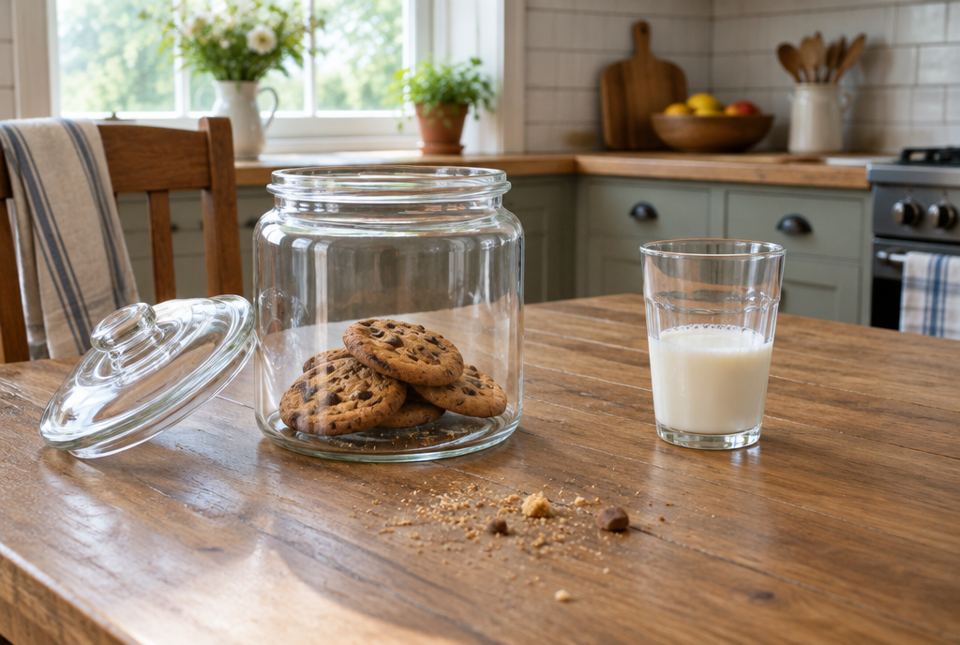 Nobody wrote a note, but the clues tell a story. The open lid and the crumbs are evidence you can use to make an inference. AI-generated imageClues in the text plus what I know equals an inference.
Stated or implied?
- Stated: The text says it. It was very cold outside.
- Implied: The text hints at it. Mia's breath puffed out in little white clouds, and she couldn't feel her toes.
In the second sentence, the writer never says cold. But you know breath makes white clouds in cold air, and toes go numb in the cold. So it is implied that it is very cold.
Writers often show instead of tell. That makes reading more interesting, and it means you have to think!
Worked exampleLet's sort stated and implied
Owen stared at the spelling test. His hands were sweaty. He had forgotten to study. The test had 20 words.
Which information is stated? What is implied?
- Stated (you can point to it): Owen stared at the test. His hands were sweaty. He forgot to study. The test had 20 words.
- Implied (you figure it out): Owen feels nervous or worried.
- Evidence: sweaty hands + he forgot to study.
- What I know: When people are nervous, their hands can get sweaty. Not studying makes a test feel scary.
Stated: sweaty hands, forgot to study, 20 words. Implied: Owen is nervous. I used the clues + what I know.
Read: The Empty Feeder
Every morning, Grandpa filled the bird feeder in the backyard. Chickadees and blue jays came all day long.
One snowy morning, Lily looked outside. The feeder was swinging back and forth, and it was completely empty. Seeds were scattered all over the snow below it. Next to the seeds were paw prints, and a long scratch ran down the tree trunk beside the feeder.
Grandpa came to the window with his coffee. He looked at the feeder, then at the tracks. He shook his head and chuckled. "Our furry friend with the bushy tail was here again," he said. "Time to buy a squirrel-proof feeder."
Worked exampleLet's make an inference
Who emptied the feeder? How does Grandpa feel about it?
- Stated clues: the feeder is empty and swinging; seeds are scattered; there are paw prints and a scratch on the tree. Grandpa says our furry friend with the bushy tail.
- What I know: Squirrels have bushy tails, climb trees and love bird seed.
- Grandpa also says squirrel-proof feeder.
- Inference 1: A squirrel emptied the feeder. (The text never says a squirrel ate the seeds, so it is implied.)
- How Grandpa feels: He chuckles and calls it a friend. What I know: People chuckle when something is a little funny, not when they are angry.
- Inference 2: Grandpa is amused (finds it a bit funny), not angry.
A squirrel emptied the feeder. Grandpa is amused. Evidence: bushy tail, paw prints, the scratch on the tree, squirrel-proof, and his chuckle.
Check your inference
A good inference must fit all the clues. Ask:
- Does my inference match the evidence?
- Is there a clue that doesn't fit?
- Could there be another possible answer?
For example, could a bird have emptied the feeder? Birds don't leave paw prints or scratch tree trunks, and they don't have bushy tails. So the squirrel inference fits better.
Thinking skills that help me
When you understand a text, you are using thinking skills. Naming them helps you use them again on purpose.
- Noticing details: paying attention to small clues (the scratch on the tree).
- Connecting: using what I already know (squirrels have bushy tails).
- Inferring: figuring out what isn't said.
- Questioning: asking why? and how do I know?
- Checking: testing my idea against all the clues.
- Comparing: seeing how things are alike and different.
- Visualizing: picturing the scene.
Just for funRiddle: The more of me you make, the more you leave behind. What am I?
Footsteps! (Just like the paw prints that gave away the feeder thief.)
Talk like a detective
Use these sentence starters:
- I think ___ because the text says ___ and I know ___.
- The clue that helped me most was ___.
- The thinking skill I used was ___.
Hands-on activityMystery bag and mystery sentences
You need: a bag, 5 small household objects, paper and a pencil.
Part 1: A grown-up secretly puts objects into a bag that all belong to one person or activity (for example: goggles, a towel, a swim cap = going swimming; or a mitten, a scarf, a toque = going outside in winter). Pull out one object at a time. After each one, make an inference: Where is this person going? Explain your evidence.
Part 2: Write 3 show, don't tell sentences for a grown-up to infer. Example: She yawned, rubbed her eyes and put her head on the table. (Inference: she is tired.) Can they infer the feeling or the place?
Your turn
1What is the difference between stated and implied information?
Stated is said right in the text. Implied is hinted at; you figure it out from clues.
2Leo's face turned red, and he slammed the door. How does Leo feel? What are the clues?
Angry (or upset). Clues: his face turned red and he slammed the door.
3In The Empty Feeder, which two kinds of birds came to the feeder? Is this stated or implied?
Chickadees and blue jays. It is stated.
4Who emptied the feeder? Is this stated or implied?
A squirrel. It is implied (Grandpa hints at it, but the text never says a squirrel ate the seeds).
5Name two clues that point to the squirrel.
Any two: paw prints; a scratch on the tree trunk; Grandpa says furry friend with the bushy tail; Grandpa says squirrel-proof feeder.
6How do you know Grandpa isn't angry?
He chuckles and calls the animal our furry friend.
7The ground was wet, and there were puddles everywhere. People were closing their umbrellas. What can you infer?
It just rained (it was raining and has stopped).
More practice: warm-up
1It was a hot day. Stated or implied?
2Sweat dripped down Ana's face as she fanned herself. What is implied about the weather?
3What do you add to text clues to make an inference?
4What did Grandpa decide to buy?
5The baby rubbed her eyes and yawned. How does the baby feel?
More practice: on your own
1Mom looked at the clock, grabbed her keys and ran out the door with one shoe on. What can you infer? Give evidence.
Mom is late (in a big hurry). Evidence: she looked at the clock, ran, and left with one shoe on.
2Kai opened the box, gasped, and hugged his aunt tight. How does Kai feel about the gift? How do you know?
He loves it / is happy and surprised. Clues: he gasped and hugged his aunt.
3Could a bird have emptied Grandpa's feeder? Use evidence.
Not likely. Birds don't leave paw prints, scratch tree trunks or have bushy tails. The clues fit a squirrel better.
4Write a sentence that implies a character is scared, without using the word scared.
Example: Ben's knees shook, and he pulled the blanket over his head when the thunder boomed.
5Name the thinking skill: I asked myself, how do I know Grandpa isn't angry?
Questioning. (You might also be checking your inference.)
Challenge
1When Priya came home from the game, she dropped her hockey bag by the door, didn't say hello, and went straight to her room. Make an inference about the game. Give evidence and explain what you know.
Priya's team probably lost (or the game went badly). Evidence: she dropped her bag, didn't say hello, went straight to her room. I know people often act quiet and want to be alone when they're disappointed. (Accept another inference if supported, like she was very tired.)
2Explain why two readers might make different inferences from the same text. Is that okay?
They have different background knowledge and experiences. It's okay as long as each inference is supported by evidence and fits all the clues.
3Which thinking skill helped you most in The Empty Feeder? Explain.
Example: Noticing details helped me most, because the paw prints and the scratch on the tree were small clues I needed to figure out it was a squirrel. (Any named skill with a reason.)
Quiz
1. Implied information is...
2. An inference is made from...
3. Jake's teeth chattered and he pulled his scarf tighter. What can you infer?
4. In The Empty Feeder, which clue shows a squirrel was there?
5. Which sentence is stated, not implied?
What this lesson teaches: Grade 3 students make inferences using stated and implied information (C3.2) and identify the thinking skills that help them analyze texts (C3.8). Checking an inference against all the clues is part of monitoring understanding (C2.4).
How to help at home:
- Inference is everywhere: in TV shows, picture books and real life. Ask, "How do you think she feels? How do you know?"
- Always follow an answer with "What clue told you that?"
- Play "show, don't tell": act out a feeling without words; your child infers it and names the clues.
Common difficulties:
- Answers with no evidence. Insist gently on a clue from the text.
- Over-inferring (inventing things the text doesn't support). Ask, "Is there a clue for that?"
- Confusing stated and implied. A quick test: "Can you point to the words?" If yes, it is stated.