D. Healthy Living · Healthy LivingHealthy Mouth, Healthy Body: Food Choices and Oral Health
D2.1 A1.3About 35 minutes
Learning goals- I can explain why a healthy mouth is important for my whole body.
- I can explain how sugar and germs can cause cavities.
- I can sort foods and drinks by how they affect my teeth and choose tooth-friendly snacks.
- I can keep going with healthy teeth habits every day.
Words to know
oral health
The health of your mouth: your teeth, gums and tongue.
plaque
A sticky layer of germs that forms on teeth.
acid
Something sour that can wear away the hard outside of your teeth.
enamel
The hard, shiny outer layer of a tooth.
cavity
A hole in a tooth caused by tooth decay.
gums
The pink skin that holds your teeth in place.
Smile!
Your teeth help you chew, talk clearly and smile. In Grade 2 you learned to brush for two minutes, twice a day, to floss, and to visit the dentist. Now you'll learn why your mouth matters to your whole body, and how the foods and drinks you choose can protect your teeth or hurt them.
A healthy mouth helps your whole body
When teeth or gums are sore or infected:
- It can hurt to eat, so it's hard to get healthy food.
- Pain can make it hard to sleep and to pay attention at school.
- Germs from an infected tooth can make you sick.
- You might feel shy about smiling or talking.
So taking care of your mouth is part of taking care of all of you.
How cavities happen
Germs live in plaque on your teeth. When you eat or drink something with sugar, the germs use the sugar and make acid. The acid attacks your tooth enamel. If this happens again and again, it can make a hole called a cavity.
It's not only how much sugar, but how often
Every time you have something sugary, acid attacks your teeth for a while. Sipping juice or pop all morning, or nibbling sweets all day, means your teeth are under attack again and again. Sticky foods like gummies and caramel stay stuck on teeth longer.
That's why it is better to have treats with a meal, then drink water or brush.
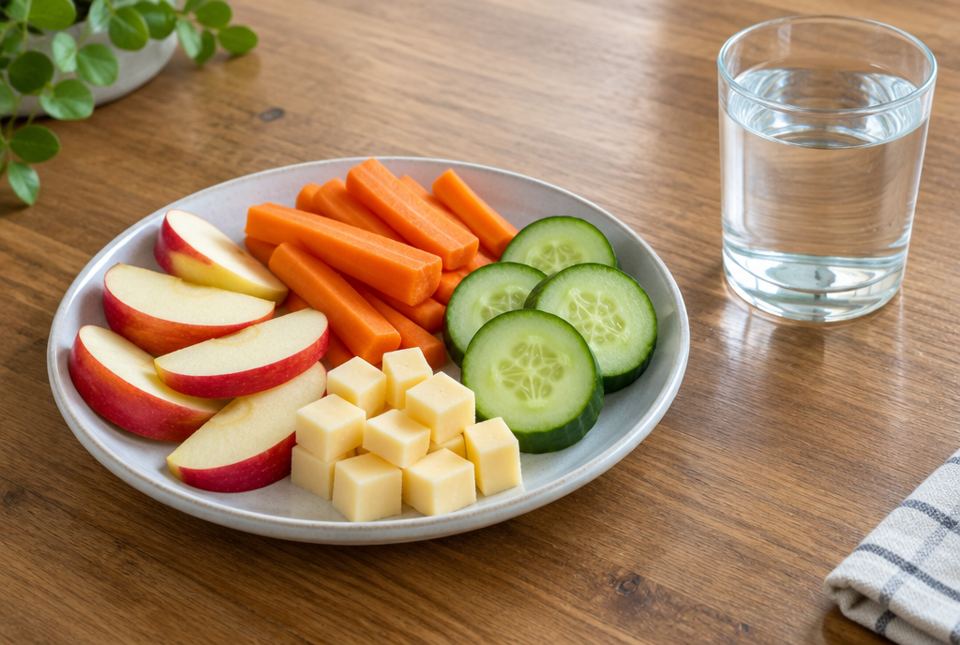 A tooth-friendly snack: crunchy vegetables and fruit, cheese, and water to drink. Compare this with sipping juice or nibbling sticky sweets all day. AI-generated imageSame juice, different habit. Sipping all morning (A) means acid attacks again and again. Having it with breakfast and then water (B) means just one.
| Tooth-friendly 😁 | Sometimes, with a meal 🙂 | Hard on teeth 😬 |
|---|
| water (plain tap water is great) | 100% fruit juice | pop, sports drinks and sweet drinks sipped all day |
| plain milk, cheese, plain yogurt | dried fruit like raisins (sticky) | gummies, caramel and sticky candy |
| crunchy vegetables like carrots and celery | crackers (they can stick in teeth) | hard candy and lollipops that stay in your mouth a long time |
| fresh fruit, eggs, nuts or seeds (if no allergy) | | |
Keep going! (perseverance)
Healthy teeth habits only work if you do them every day, even when you're tired. Some ideas: use a 2-minute song, keep a brushing chart, or brush at the same times every day. When it feels hard, say: "I can do hard things. My teeth are worth it!"
Worked exampleLet's pick the best drink for a soccer game
After soccer you're thirsty. Choices: pop, a sports drink, or water.
- Pop has lots of sugar and acid.
- Sports drinks usually have sugar too.
- Water has no sugar and helps your body after exercise.
Water is the best choice for your teeth and your body.
Worked exampleLet's fix a habit
Ari keeps a bottle of apple juice at his desk and sips it all morning. What could he change?
- The problem: his teeth have acid attacks again and again all morning.
- A better idea: have a small glass of juice with breakfast, then drink water the rest of the morning.
- Even better: eat a whole apple instead of juice.
Ari can drink water between meals and have juice only with a meal, or choose a whole apple.
Just for funWhat does a dentist call an astronaut's cavity?
A black hole!
Hands-on activitySugar detective and brushing check
You need: a grown-up, 4 or 5 food or drink packages, paper, a pencil.
- With your grown-up, find the Nutrition Facts table on each package and look for the line that says Sugars.
- Sort the packages: Tooth-friendly, Sometimes, Hard on teeth. Also think: is it sticky? Would people sip it slowly?
- Pick one swap you could make this week, like water instead of a sweet drink.
- Make a 7-day chart with a box for morning and night brushing and one for flossing. Tick it every day. Keep going all week!
Your turn
1Name two ways a sore tooth could affect the rest of your day.
Any two: it could hurt to eat, make it hard to sleep, make it hard to pay attention at school, make you sick if infected, or make you shy to smile.
2What do germs in plaque make when you eat sugar?
Acid, which attacks tooth enamel.
A hole in a tooth caused by tooth decay.
4Which is more tooth-friendly: cheese or caramel?
Cheese. Caramel is sugary and sticky.
5Why are sticky candies hard on teeth?
They stick to teeth, so the germs have sugar to use for a long time.
6What is the best drink between meals for your teeth?
More practice: warm-up
1How many times a day should you brush?
Two times: morning and night.
2For how long should you brush?
3What is the hard outer layer of a tooth called?
4Are carrot sticks tooth-friendly?
Yes. They are crunchy vegetables with little sugar.
5Who checks and cleans your teeth?
A dentist (and a dental hygienist).
More practice: on your own
1Maya eats 5 gummy candies all at once after lunch. Sam eats 5 gummy candies one at a time over the whole afternoon. Whose teeth have more acid attacks? Why?
Sam's. Each time he eats one, acid attacks his teeth again. Maya's teeth had one attack after her meal.
2Sort: water, pop, plain yogurt, lollipop, apple.
Tooth-friendly: water, plain yogurt, apple. Hard on teeth: pop, lollipop.
3Why do people sometimes brush or drink water after eating a treat?
To wash away the sugar and food bits so germs make less acid.
4How can taking care of your teeth help you learn at school?
Healthy teeth don't hurt, so you can eat well, sleep well and pay attention.
5Raisins are dried fruit. Why are they a "sometimes" food for teeth?
They are sticky and have lots of natural sugar packed into a small piece, so they can stay on teeth.
Challenge
1Plan a tooth-friendly after-school snack and drink. Explain why it's good for your teeth.
Answers will vary. Example: cheese, cucumber slices and water. They have little sugar, aren't sticky, and water rinses the mouth.
2Your friend says, "Juice is fruit, so I can sip it all day." What would you tell them?
Juice has lots of sugar. Sipping it all day gives teeth acid attacks again and again. Have it with a meal, drink water in between, or eat whole fruit.
3You're tired at bedtime and don't want to brush. What could you tell yourself to keep going?
Answers will vary. Example: "It only takes 2 minutes. Brushing at night is important because germs have all night to make acid. I can do it!" Look for a positive, encouraging thought.
Quiz
1. What do germs make from sugar that can hurt teeth?
2. Which snack is the most tooth-friendly?
3. Which habit is hardest on teeth?
4. Why does a healthy mouth matter for your whole body?
6. What is the best drink for your teeth between meals?
Big idea: The Grade 3 expectation asks students to demonstrate an understanding of the importance of good oral health to overall health, and assess the effect of different food choices on oral health (D2.1).
How to help at home:
- Keep water as the everyday drink; offer juice and treats with meals rather than as all-day sipping.
- Supervise brushing: most children this age still need help to brush well and to floss. Use a pea-sized amount of fluoride toothpaste.
- Keep regular dental checkups as your dentist recommends. Ask your public health unit about dental programs if cost is a concern (Ontario has publicly funded dental programs for eligible children).
- Children who play contact sports may need a mouthguard; ask your coach or dentist.
Common difficulties: thinking only candy matters (juice, sports drinks and sticky snacks count too); thinking "natural sugar" can't cause cavities. Avoid shaming about cavities; focus on habits.
This lesson also builds positive motivation and perseverance (A1.3).