E. Earth and Space Systems · Water SystemsFirst Nations, Métis and Inuit Knowledges and Relationships with Water
E1.2 A3.3 A1.1 A1.5About 55 minutes
Learning goals- I can describe some First Nations, Métis and Inuit knowledges and values about water.
- I can give examples of Indigenous connections to water and ways of managing water sustainably.
- I can explain drinking water advisories in First Nations communities using current, dated facts.
- I can research respectfully, using reliable sources and Indigenous voices.
Words to know
water protector
A person who works to protect water, often guided by Indigenous teachings that water is sacred and must be cared for.
nibi
The word for water in Anishinaabemowin, the language of the Anishinaabe.
reciprocity
Giving back in return for what you receive; a relationship of mutual care.
Traditional Knowledge
Knowledge, practices and teachings that Indigenous peoples have built up and passed down over many generations through living on the land and water.
Knowledge Keeper
A person recognized by their community for holding and sharing traditional knowledge and teachings.
drinking water advisory
A public health warning that tap water should not be drunk, or should be boiled before drinking (a boil water advisory).
long-term drinking water advisory
An advisory on a public water system on a First Nations reserve that has been in place for more than a year.
Two-Eyed Seeing
An approach shared by Mi'kmaw Elder Albert Marshall: seeing with the strengths of Indigenous knowledges with one eye and of Western science with the other, and using both eyes together.
Remember from earlier grades
In earlier grades you learned about Josephine Mandamin (Anishinaabe, from Wiikwemkoong), who walked around all five Great Lakes carrying a copper pail of water, and Autumn Peltier, also from Wiikwemkoong, who spoke about clean water at the United Nations in 2018 at age 13. In Grade 7 science you learned about Two-Eyed Seeing and the Seventh Generation principle. Here you'll go deeper into knowledges and values about water and how they guide water management today.
Water is alive
Ask many First Nations, Métis and Inuit people what water is, and you might not hear "H₂O" first. Many teachings describe water as alive, as a relative and as sacred: the first environment every person lives in, before birth. If water is a relative, then we have responsibilities toward it, not just rights to use it.
Important: First Nations, Métis and Inuit are many distinct peoples, with different languages, teachings and histories. The examples below come from specific nations and communities. They are not "one Indigenous view". The best way to learn is from the Nations whose territory you live on, through their own websites, books and Knowledge Keepers.
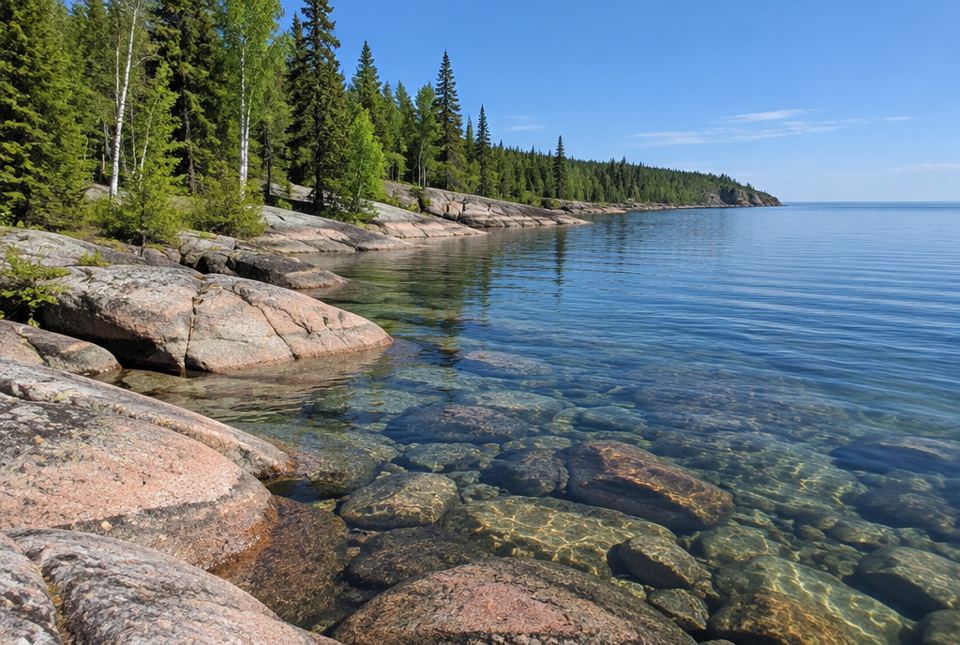 Many First Nations, Métis and Inuit teachings describe water as alive and as a relative. Thinking of water this way brings responsibilities to care for it. AI-generated image
Knowledges, values and connections
Anishinaabe (Ontario and the Great Lakes region). In Anishinaabemowin, water is nibi. In many Anishinaabe teachings, women carry a special responsibility to care for water, and water ceremonies give thanks for it. Josephine Mandamin's Water Walks (starting in 2003) were prayers in action for the Great Lakes. After she passed away in 2019, her great-niece Autumn Peltier was named Chief Water Commissioner of the Anishinabek Nation, a political organization representing many First Nations in Ontario.
Haudenosaunee. The Thanksgiving Address (in Mohawk, Ohén:ton Karihwatéhkwen, "the words that come before all else") is spoken at the start of gatherings. It gives thanks to many parts of the natural world, including the waters that quench our thirst and give life. Haudenosaunee teachings also include thinking about the effects of decisions on future generations.
Métis. Rivers and lakes were the highways of the fur trade, and Métis people were skilled voyageurs, guides and traders. In the Red River Settlement (in what is now Manitoba), Métis families farmed long, narrow river lots, so that each family had access to the river for water, travel and fishing. Fishing and harvesting along rivers and lakes remain important to Métis communities today.
Inuit. For Inuit, sea ice is a road, a hunting ground and a part of home for much of the year. Inuit hold detailed knowledge of ice, currents, snow and weather, passed on by Elders, with precise terms in Inuktut for different ice conditions. SmartICE is a program that combines this Inuit knowledge with sensors that measure ice thickness. Inuit youth assemble sensors at a production centre in Nain, Nunatsiavut (opened in 2019), and Inuit operators across many northern communities use the data to choose safer travel routes as climate change makes ice less predictable.
Ways of managing water sustainably
- Reciprocity and responsibility: take only what you need, give thanks, give back, and care for water for future generations.
- Long-term, whole-system thinking: water, land, animals, plants and people are connected (like a watershed!).
- Indigenous-led monitoring and Guardians programs: community members monitor water, fish and ice on their territories.
- Two-Eyed Seeing partnerships: projects bring together Traditional Knowledge (such as Elders' observations of changes in a river over decades) and Western science (lab tests, sensors) to understand water better than either could alone.
- Advocacy and leadership: water protectors speak up when projects threaten water, and First Nations leaders push governments to fix water systems.
Drinking water advisories: the facts, with dates
Many First Nations communities have lived under drinking water advisories, meaning tap water isn't safe to drink without boiling, or at all. The causes include aging or inadequate treatment plants, lack of funding, distance and access, and the need for trained operators. Providing safe water on reserves involves the federal government, which has responsibilities for funding infrastructure, together with First Nations.
- According to Indigenous Services Canada, as of September 10, 2026: 158 long-term drinking water advisories had been lifted since November 2015, and 38 were still in effect in 36 communities.
- Neskantaga First Nation, in northern Ontario, has had a boil water advisory since February 1995. A new water treatment system was commissioned in December 2020, but problems remained, and the advisory was still in effect in September 2026.
- Many advisories have been lifted because First Nations, their water operators and governments built and repaired plants and trained local operators.
These numbers change. When you research, always check the date of your source and look for the most recent figures.
Speak respectfully and accurately
Use present tense: First Nations, Métis and Inuit are living, growing communities today. Talk about advisories as a problem of infrastructure, funding and fairness, not as a weakness of communities. Name the specific Nation when you can, and credit knowledge to the people who shared it.
Worked exampleLet's look at a river with Two-Eyed Seeing
A First Nation and a university study a river where fish numbers are dropping. Show what each "eye" contributes and how they work together.
- Indigenous knowledge eye: Elders and harvesters have watched the river for decades. They notice the ice now forms later, certain fish spawn at different times, and plants along the banks have changed. They know which places were important for spawning.
- Western science eye: scientists measure water temperature, dissolved oxygen, nutrients and count fish with nets and sensors at specific times.
- Both eyes together: the Elders' long-term observations show when and where to measure and what has changed over time. The measurements give numbers that can be compared across rivers and used in reports.
- Decisions: the community and scientists agree on actions, such as protecting spawning areas and planting trees for shade, and keep monitoring together.
- Respect: the community decides how its knowledge is shared and used.
Each way of knowing contributes something the other can't. Together they give a fuller picture and better decisions, made with the community, not just about it.
Two-Eyed Seeing in the river example: each way of knowing notices things the other misses, and together they give a fuller picture. The community decides how its knowledge is shared and used.Hands-on activityResearch: water in my region (A1.1, A1.5)
- Whose land and water? Find out which First Nations, Métis and/or Inuit communities have relationships with the land and water where you live. Good starting points: the websites of nearby First Nations, the Métis Nation of Ontario, local friendship centres, and your school board's land acknowledgement.
- Which watershed? Connect this to Lesson 3: which river and lake does your water come from?
- Choose one topic and research it from at least two reliable sources, including at least one Indigenous-led source (for example, a Nation's own website or a book by an Indigenous author). Topic ideas: a water protector or Water Walk in Ontario; a First Nation's drinking water story (find the current status and the date); an Indigenous Guardians or monitoring program; or SmartICE or another project combining Indigenous knowledge and technology.
- Communicate: create a short presentation or poster with a timeline, a map (if relevant) and a list of sources with dates.
- Reflect: write two or three sentences on how a teaching about water as a relative could change how your family uses water.
What to look for: specific Nations named, current dated facts, Indigenous voices quoted or credited, and respectful language. Ceremonial knowledge should not be copied or performed; describe only what communities share publicly.
Your turn
1Describe one value about water that is shared in many First Nations teachings.
Any one: water is alive, a relative or sacred; people have responsibilities to care for it; take only what you need and give thanks; protect it for future generations.
2What is the Anishinaabemowin word for water?
3Who is Autumn Peltier, and what role was she given in 2019?
An Anishinaabe water protector from Wiikwemkoong who spoke at the United Nations in 2018; in 2019 she was named Chief Water Commissioner of the Anishinabek Nation.
4What part of the Haudenosaunee Thanksgiving Address relates to water?
It gives thanks to the waters, which quench our thirst and support life.
5Why were Métis river lots in the Red River Settlement long and narrow?
So that each family had access to the river for water, travel and fishing.
6How does SmartICE combine Inuit knowledge with technology?
Inuit knowledge of sea ice guides where and how ice is monitored; sensors (assembled by Inuit youth in Nain) measure ice thickness; Inuit operators use both to find safer routes.
7As of September 10, 2026, how many long-term drinking water advisories were still in effect on reserves, according to Indigenous Services Canada?
38, in 36 communities (with 158 lifted since November 2015).
More practice: warm-up
1What is a water protector?
Someone who works to protect water, often guided by teachings that water is sacred.
2What is a boil water advisory?
A warning to boil tap water before drinking it, because it may not be safe.
3Who shared the idea of Two-Eyed Seeing?
Mi'kmaw Elder Albert Marshall.
4Since when has Neskantaga First Nation had a boil water advisory?
5What does reciprocity mean?
Giving back for what you receive; a relationship of mutual care.
More practice: on your own
1Why is it a mistake to talk about "the Indigenous view of water" as if there were only one?
First Nations, Métis and Inuit are many distinct peoples, with different languages, teachings and histories. Views must be credited to specific Nations or people.
2Name three causes of long-term drinking water advisories.
Any three: aging or inadequate treatment plants, lack of funding, remote locations, shortage of trained operators, source water contamination.
3How might treating water as a relative change a decision about building a new mine near a lake?
It would focus on responsibilities to the water and future generations, not just short-term profit. People would ask how the lake will be affected for many generations, involve the community in the decision, and might refuse or change the project to protect the water.
4Why should you always check the date on a source about drinking water advisories?
The numbers change as advisories are lifted or new ones are issued. An old source could give wrong, outdated information.
5Give one way Indigenous knowledge and Western science together can improve water monitoring.
Long-term observations by Elders and harvesters show changes over decades and where to look; instruments give precise measurements. Together they give a fuller, more accurate picture (Two-Eyed Seeing).
Challenge
1As of September 10, 2026, Indigenous Services Canada reported 158 long-term advisories lifted since November 2015 and 38 still in effect. Out of these 196 advisories, what percentage had been lifted? (Round to the nearest whole percent.)
158 + 38 = 196. 158 ÷ 196 ≈ 0.806 → about 81%. (This counts advisories in place in 2015 plus new ones added since then.)
2Explain why safe drinking water on reserves is a question of fairness, not only of technology.
The technology to treat water safely exists and is used in most Canadian towns. Advisories have lasted for years because of funding, infrastructure, jurisdiction and access decisions. Most Canadians can count on safe tap water, so leaving some communities without it is unequal. Many First Nations leaders describe it as a human rights issue.
3Design a respectful plan for a class water project that includes Indigenous knowledge. List at least four steps.
Sample: 1. Find out whose territory and watershed the school is in. 2. Invite a Knowledge Keeper or community member through proper channels (school board Indigenous education staff), offering appropriate thanks and honoraria as the community advises. 3. Listen and ask how knowledge may be shared; don't record or reproduce ceremonies without permission. 4. Combine their teachings with science testing of local water. 5. Credit the people and Nation and share results back with the community.
Quiz
1. In many Anishinaabe teachings, water is...
4. According to Indigenous Services Canada, how many long-term drinking water advisories were in effect on September 10, 2026?
5. Why did Métis families at Red River have long, narrow river lots?
6. Which statement is respectful and accurate?
Big idea (E1.2): many First Nations, Métis and Inuit knowledges describe water as alive, sacred and a relative, with responsibilities of care and reciprocity for future generations. Connections include Anishinaabe water teachings and Water Walks, the Haudenosaunee Thanksgiving Address, Métis river life and river lots, and Inuit sea-ice knowledge. Sustainable management includes Indigenous-led monitoring, Two-Eyed Seeing partnerships and advocacy. This lesson tags A3.3 (contributions from communities), A1.1 (research) and A1.5 (communication).
How to help: learn together whose territory you live on. Read books by Indigenous authors about water (for example, The Water Walker by Joanne Robertson, about Josephine Mandamin). Check the Indigenous Services Canada drinking water advisory page together and note the date.
Sensitive topics: drinking water advisories are a current, serious issue. Present them as infrastructure, funding and fairness problems, not as failings of communities, and highlight First Nations leadership in solving them. Ceremonies should be described only as communities share them publicly; don't have children imitate ceremonies.
Common difficulties:
- Generalizing ("Indigenous people believe…"). Name the Nation.
- Using past tense. These are living communities and knowledges.
- Using old numbers. Always date figures.
Sources: Indigenous Services Canada, "Ending long-term drinking water advisories" (figures as of September 10, 2026) and Neskantaga First Nation advisory page (updated September 22, 2026); Arctic Inspiration Prize profile of SmartICE (Northern Production Centre in Nain opened 2019).