B. Global Inequalities: Economic Development and Quality of Life · Global Inequalities: Economic Development and Quality of LifeCase Studies: How History, Resources, Debt and Conflict Shape Economies
B1.2About 55 minutes
Learning goals- I can analyse how factors such as resource ownership, colonial history, debt, conflict and government choices have affected the economies of specific countries.
- I can explain how these economic factors are connected to quality of life.
- I can compare case studies and draw evidence-based conclusions.
Words to know
case study
A detailed look at one place or example to understand a bigger idea.
foreign ownership
When companies or investors from another country own a business, mine or land.
debt
Money that is owed. Countries borrow from banks, other governments or international organizations and must repay with interest.
interest
Extra money paid for borrowing money.
sovereign wealth fund
A fund owned by a country's government that saves and invests money, often from resource sales, for the future.
refugee
A person forced to flee their country because of war, violence or persecution.
social spending
Government spending on health care, education, pensions and other programs that support people.
Hook: rich in resources, different results
Norway, Botswana and the Democratic Republic of the Congo all have valuable natural resources. But their people's quality of life is very different. Why? In this lesson you will study case studies to find out how history, choices and events shape a country's economy, and how the economy shapes people's lives.
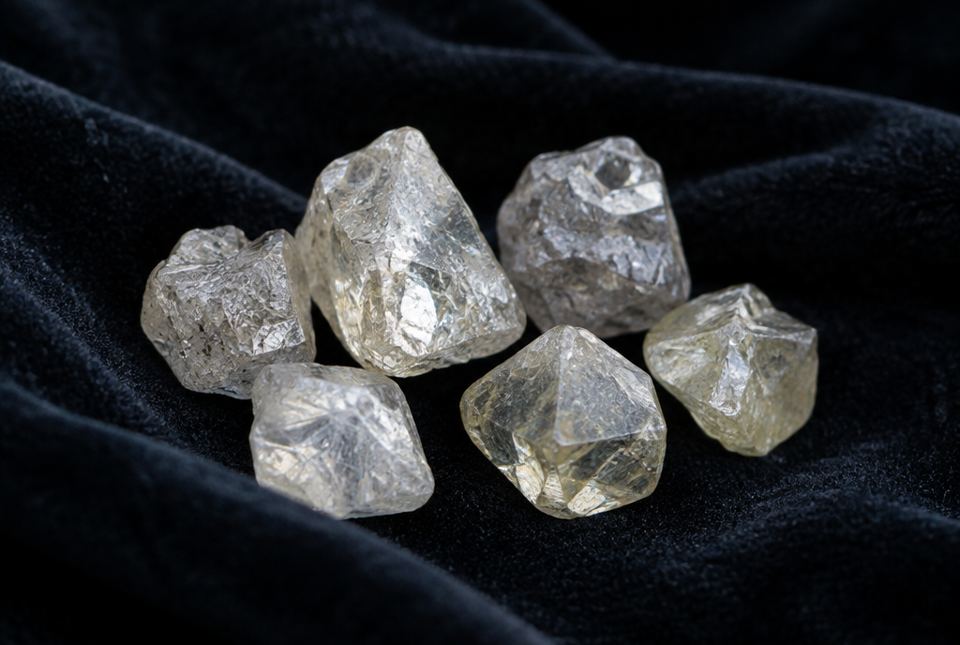 Rough diamonds like these are a valuable natural resource in Botswana. Having resources is a start, but choices and history decide who benefits. AI-generated image
Case study 1: Norway, saving resource wealth
Oil was discovered off Norway's coast in 1969. The government decided that oil wealth belongs to all Norwegians, now and in the future. Much of the income is placed in a sovereign wealth fund, now one of the largest in the world. The government also spends heavily on health care, education and social programs. Norway is consistently near the top of the HDI (UNDP).
Connection to quality of life: careful management + social spending → high life expectancy, education and income for most people.
Case study 2: Botswana, diamonds and stable government
When Botswana became independent from Britain in 1966, it was one of the poorest countries in the world, with very few paved roads. Diamonds were discovered soon after. Botswana's governments have been elected and stable, and diamond income was invested in roads, schools and health care. Botswana grew into an upper-middle-income country (World Bank).
Challenges: the economy depends heavily on diamonds, income inequality is high, and Botswana was hit hard by HIV/AIDS, though treatment programs have greatly improved survival.
Case study 3: Democratic Republic of the Congo (DRC), resource wealth and a painful history
The DRC has huge mineral wealth. It produces about 70% of the world's mined cobalt (U.S. Geological Survey), a metal used in rechargeable batteries. Yet many Congolese people live in poverty.
- Colonial history: from 1885 to 1908 the territory was ruled as the personal colony of King Leopold II of Belgium, with forced labour and great loss of life; then Belgium ruled it until independence in 1960. Little was invested in education or local industry.
- Conflict: decades of armed conflict, especially in the east, have displaced millions of people and made it hard to build schools, roads and clinics.
- Foreign ownership and weak governance: many mines are owned or financed by foreign companies, and corruption means less of the profit reaches citizens. Some cobalt is dug by hand in unsafe conditions, sometimes involving children.
Connection to quality of life: wealth leaves the country or is lost to conflict, so health, education and incomes stay low.
Case study 4: Bangladesh, factories, growth and safety
Bangladesh's garment industry makes clothing sold around the world, including in Canada, and clothing earns most of its export income. The industry employs millions of workers, many of them women, and has helped incomes and life expectancy rise.
But in 2013 the Rana Plaza factory building collapsed, killing more than 1 100 workers. Afterwards, clothing brands, unions and the government signed agreements to inspect and improve factory safety.
Connection to quality of life: jobs raised incomes, but low wages and unsafe conditions show that growth alone is not enough.
Debt and conflict
- Debt: many lower-income countries borrowed money in the 1970s and 1980s. When interest rates rose, repayments took money away from schools and hospitals. In 1996 the IMF and World Bank started the Heavily Indebted Poor Countries (HIPC) Initiative, which reduced debts for more than 30 countries so they could spend more on services.
- Conflict: war destroys infrastructure, stops trade and forces people to flee. For example, the war in Syria, which began in 2011, forced millions of people to become refugees (UNHCR). Canada welcomed many Syrian refugees. Refugees often lose homes, jobs and schooling, so quality of life falls sharply.
| Country | Key factor(s) | Effect on economy | Effect on quality of life |
|---|
| Norway | Oil wealth, saving fund, social spending | Strong, stable income | Very high HDI |
| Botswana | Diamonds, stable elected government | Fast growth since 1966 | Big improvements; inequality and HIV challenges |
| DRC | Colonial history, conflict, foreign ownership, corruption | Wealth not shared widely | Low HDI for many people |
| Bangladesh | Garment exports | Growth, jobs | Rising incomes and life expectancy; worker safety issues |
Worked exampleLet's compare two case studies
Compare Botswana and the DRC. Both have valuable minerals. Why did their economies develop differently?
- Similarity: both have valuable minerals (diamonds; cobalt, copper and others) and both were colonized.
- Difference 1, government: Botswana has had stable, elected governments that invested resource income; the DRC has faced conflict and corruption.
- Difference 2, ownership and history: in the DRC, a brutal colonial history left little investment in people, and much mining profit goes to foreign owners or is lost.
- Conclusion: resources alone don't decide development; how resources are governed and shared, plus history and peace, make the biggest difference.
Botswana's stability and investment helped turn resources into better lives; the DRC's conflict, colonial legacy and weak governance have kept many people from benefiting.
Hands-on activityTrace a product to its country
You need: a clothing label or a battery-powered device in your home, a device to research, and a grown-up.
- Find where one item was made (clothing tag) or what materials it uses (for example, a rechargeable battery may contain cobalt and lithium).
- Research one fact about the economy of that country and one quality-of-life indicator (with source and year).
- Write a short paragraph: How does buying this product connect you to the economy and people of that country? What could consumers or companies do to make sure workers are treated fairly?
Look for: a correct country, two facts with sources, and a thoughtful connection.
Just for funNorway's oil fund is so big that it owns a small slice (around 1.5%) of all the companies listed on stock markets around the world. So if you are wearing sneakers or using a phone from a big company, there is a good chance a few Norwegians own a teeny, tiny piece of it.
Your turn
1What is a sovereign wealth fund, and how did Norway use one?
A government-owned fund that saves and invests money for the future. Norway puts much of its oil income into one so that current and future Norwegians benefit.
2Why did Botswana's diamonds help most people more than many other countries' resources helped theirs?
Botswana had stable, elected governments that invested diamond income in roads, schools and health care.
3Name two factors that have held back the DRC's economy.
Any two: colonial history, armed conflict, foreign ownership of mines, corruption.
4What happened at Rana Plaza in 2013, and what changed afterwards?
A garment factory building collapsed, killing more than 1 100 workers. Afterwards, brands, unions and the government signed agreements for factory safety inspections and improvements.
5How can debt affect quality of life?
Money spent on repaying debt and interest cannot be spent on schools, hospitals and clean water.
6What was the HIPC Initiative?
A program started in 1996 by the IMF and World Bank to reduce the debts of heavily indebted poor countries so they could spend more on services.
7How does conflict lower quality of life?
It destroys homes, schools and hospitals, stops trade and jobs, and forces people to flee as refugees.
More practice: warm-up
1In what year was oil discovered off Norway?
2When did Botswana become independent?
3Which metal does the DRC produce about 70% of the world's mined supply of?
A person forced to flee their country because of war, violence or persecution.
5What industry earns most of Bangladesh's export income?
The garment (clothing) industry.
More practice: on your own
1Explain how foreign ownership of a mine can affect a country's economy.
Profits may go to owners in other countries instead of staying to pay for local jobs, services and businesses, so the country gains less from its own resources. (Fair taxes and royalties can help.)
2Why might depending on one export, like diamonds or clothing, be risky for Botswana or Bangladesh?
If demand or prices fall (for example, if lab-grown diamonds become popular or brands move factories elsewhere), income and jobs could drop sharply.
3Explain how colonial history can still affect an economy today.
Colonial powers often took resources, built infrastructure only for export, and invested little in education, so newly independent countries started with few skilled workers and economies dependent on raw materials.
4How did the garment industry change quality of life in Bangladesh, both positively and negatively?
Positive: millions of jobs, especially for women, higher incomes. Negative: low wages and unsafe conditions, shown by the Rana Plaza collapse.
5Why do social programs (health care, education) connect economic wealth to quality of life?
They turn national income into services everyone can use, so wealth improves the lives of most people, not just the richest.
Challenge
1Using two case studies, argue whether good government or natural resources matter more for development.
Example: Good government matters more. Botswana and the DRC both have valuable minerals, but Botswana's stable government invested its diamond income while the DRC's conflict and corruption meant wealth was lost. Norway also shows that good management of oil turns resources into a high quality of life.
2A company wants to open a new mine in a lower-income country. Suggest three conditions the government could set so that local people benefit.
Examples: (1) fair taxes or royalties that fund schools and clinics; (2) jobs and training for local workers with safe conditions and no child labour; (3) environmental protection and real consultation with, and consent from, local and Indigenous communities. Others: local ownership share, processing in-country.
3Explain how debt relief could start a positive cycle of the kind you learned about in the last lesson.
Debt relief frees money → spent on health and schools → healthier, better-educated people → more productive workers and higher incomes → more tax revenue → less need to borrow. One change strengthens others.
Quiz
1. What did Norway do with much of its oil income?
2. What helped Botswana use diamond wealth to develop?
3. Which factor has NOT been a major challenge for the DRC's economy?
4. The Rana Plaza collapse in 2013 led to…
5. How can heavy debt reduce quality of life?
6. The war in Syria, which began in 2011, mainly affected quality of life by…
What this lesson is about: how factors such as colonial history, debt, foreign ownership, conflict and government spending affect the economies of specific countries, and how those factors connect to quality of life (B1.2). The Ontario curriculum's examples include foreign ownership of resources, colonial history, debt, conflict and refugees, and social spending in countries such as Norway.
How to help at home:
- Read clothing labels together and talk about where things come from.
- Some content (forced labour, conflict, a factory collapse) is serious. Keep discussion factual and calm, and focus on what people did to improve conditions.
Common difficulties:
- Thinking resources automatically make a country rich.
- Presenting countries as only having problems. Encourage balance: Botswana's success, Bangladesh's rising life expectancy, and the strength of people in difficult circumstances.