B. People and Environments: The Role of Government and Responsible Citizenship · Government and CitizenshipOther Elected Bodies: School Boards and Band Councils
B3.2 B3.3About 40 minutes
Learning goals- I can describe what a school board does and how trustees are chosen.
- I can describe what a band council does and the services it provides.
- I can compare different elected bodies and their responsibilities.
- I can explain how a secret-ballot election works.
Words to know
elected body
A group of people chosen by voters to make decisions.
school board
An elected group that runs the public schools in an area.
trustee
A person elected to a school board.
band council
The elected government of many First Nations, made up of a chief and councillors.
Indian Act
A federal law, first passed in 1876, that set rules for First Nations, including band councils. Many First Nations want to replace it with their own laws.
ballot
The paper (or screen) where a voter marks their choice. A secret ballot means no one sees how you voted.
Who decides about your school?
Who decides when a new school gets built? Who hires your principal? Who arranges the school bus?
Not the Prime Minister, and not your mayor! These decisions are made by another elected body: your school board. In many First Nations, a different elected body, the band council, makes decisions about the community's school, homes, water and more.
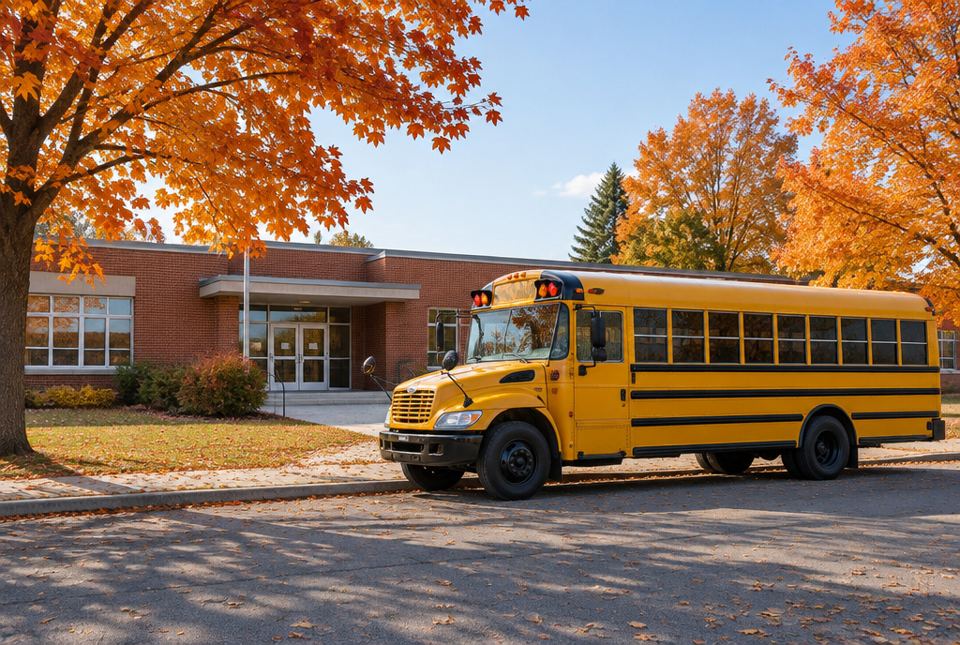 Building schools, hiring principals and arranging buses are decisions made by your elected school board, not by the mayor or the Prime Minister. AI-generated image
School boards in Ontario
Education is provincial jurisdiction. The Province of Ontario writes the curriculum (what you learn) and gives most of the money for schools. But the province does not run each school itself. School boards do.
Ontario has four kinds of publicly funded school boards:
- English public boards
- English Catholic boards
- French public boards
- French Catholic boards
Each board is led by trustees, elected by voters in the area. In Ontario, trustees are elected on the same day as municipal councils, every four years. (The next one is Monday, October 26, 2026.) Each board also has student trustees: high school students who share students' views at board meetings.
| A school board… | Examples |
|---|
| Hires staff | Teachers, principals, educational assistants, custodians |
| Looks after buildings | Builds new schools, repairs roofs, decides when to close or combine schools |
| Sets school areas | Decides which school each neighbourhood goes to |
| Arranges transportation | Plans school bus routes, often with other boards |
| Makes a budget and policies | Decides how to spend its money; makes rules, such as for safe schools |
Band councils
Many First Nations in Canada have a band council: a chief and councillors chosen by the members of the First Nation.
Band councils were set up under the Indian Act, a federal law first passed in 1876. Before that, and still today, First Nations had their own ways of governing, with their own leaders and laws. Some First Nations elect their councils using rules in the Indian Act. Many others use their own community election rules. You will learn more about First Nations, Métis and Inuit governments in the next lesson.
A band council looks after many services for its community, such as:
- the community school (many First Nations run their own schools)
- housing and roads
- drinking water and waste
- a health centre and social programs
- managing the community's lands and businesses
- fire protection, recreation, and sometimes a police service
The band council works from a band office, a lot like a town hall. Much of the money for these services comes from the federal government, because of treaties and Canada's responsibilities to First Nations. Many First Nations also earn money from their own businesses.
| Town council | School board | Band council |
|---|
| Who is elected? | Mayor/reeve and councillors | Trustees | Chief and councillors |
| Who votes? | Eligible voters living in the municipality | Eligible voters who support that board | Members of the First Nation (following its election rules) |
| Main jobs | Local services like water, roads, libraries | Running schools | Many community services: school, housing, water, health, lands |
| Where they meet | City or town hall | Board office | Band office or council chambers |
Elections, fair and secret
Most elections in Canada use a secret ballot. You mark your choice privately, fold it, and put it in a box. Nobody can see how you voted, so nobody can pressure you. Many schools also elect a student council this way. That's practice for being a voter!
Worked exampleLet's find the right elected body
Which elected body should handle each one? (a) A school's gym roof is leaking. (b) A First Nation wants to build new homes in its community. (c) A town's library wants longer hours.
- (a) School buildings are looked after by the school board, so contact the trustee or board.
- (b) Housing in a First Nation community is a job of the band council (chief and council).
- (c) Public libraries are municipal, so this is for the town council (and the library board it appoints).
(a) School board, (b) band council, (c) town council.
Worked exampleLet's follow a school board decision
A neighbourhood is growing fast and its school is crowded. What might the school board do?
- The board studies the problem: how many students are coming, and how much space there is.
- It asks families what they think, for example at a public meeting.
- Trustees vote on a plan: for example, add portables, change school areas, or ask the province for money to build a new school (the province gives most of the money for new schools).
- The board puts the plan into action.
The board studies the problem, gets public input, trustees vote on a plan, and it may need provincial money. Two levels (board and province) work together.
Just for funWhy did the pencil run for student council?
It wanted to make its mark! (On a secret ballot, of course.)
Hands-on activityHold a family election
You need: small pieces of paper, a pencil for each voter, a box or bowl.
- Decide what you are electing: for example, a Weekend Activity Trustee who plans one family activity.
- Two or three people are candidates. Each gives a 30-second speech: "If you choose me, I will..."
- Each voter writes one name on a slip, folds it so no one sees (a secret ballot), and puts it in the box.
- Two people count the votes together so the count is fair.
- The winner plans the activity. Afterwards, talk: Did the winner keep their promise?
What to look for: your child can explain why the ballot is secret and why counting is done in front of others.
Your turn
1What do we call a person elected to a school board?
2Name the four kinds of publicly funded school boards in Ontario.
English public, English Catholic, French public, French Catholic.
3Who leads a band council?
A chief, with councillors.
4Name two services a band council may provide.
Any two: school, housing, roads, drinking water, health centre, fire protection, recreation, managing lands, policing.
5Which level of government writes the curriculum for Ontario schools?
The provincial government (the Province of Ontario).
A way of voting where you mark your choice privately so no one sees how you voted.
More practice: warm-up
1Who hires teachers and principals in Ontario?
2Where does a band council usually work?
3When are Ontario's school trustees elected?
On the same day as municipal elections, every four years (next: October 26, 2026).
4What federal law set up band councils?
5Who are student trustees?
High school students who share students' views on the school board.
More practice: on your own
1Education is provincial. Why does Ontario also have school boards?
The province is very big. School boards are closer to communities and know local needs, so they run schools day to day (hiring, buildings, buses) while the province sets the curriculum and gives most of the money.
2How is a band council like a town council? How is it different?
Alike: both are elected local governments that provide services like water, roads and recreation. Different: a band council governs a First Nation, often also runs the school, health and housing, manages reserve lands, and has a special relationship with the federal government through treaties.
3Why do some First Nations not use the Indian Act election rules?
Many prefer their own community election rules that fit their own traditions and needs. The Indian Act was made by the federal government, not by First Nations.
4A neighbourhood school is too crowded. Name two things a school board might do.
Any two: add portables, change school areas, ask the province for money to build a new school, use space differently, or add on to the school.
5Why is it important that two people count the ballots together?
So the count is fair and honest. Each person checks the other, and people can trust the result.
Challenge
1Why might a First Nation want to run its own school instead of sending children to a provincial school far away?
Children can learn close to home, with their language and culture taught, by teachers who know the community. Decisions are made by the community itself.
2A school board has money for either a new playground or new library books, but not both. Describe a fair way for trustees to decide.
Sample: gather information (what is most needed, costs), ask students, families and staff for input, compare benefits of each, then trustees vote in a public meeting and explain their choice.
3Student trustees cannot vote like regular trustees, but boards still have them. Why might it be useful?
Students are the people most affected by school decisions. Student trustees bring students' views and ideas that adults might miss, which can lead to better decisions.
Quiz
2. Which body usually runs services such as housing and water in a First Nation community?
3. Which is a job of an Ontario school board?
4. Why is a ballot kept secret?
5. Which law set up band councils?
6. Which level of government gives most of the money for Ontario's schools?
Big idea: Besides the three levels of government, other elected bodies make important decisions: school boards (trustees) run schools, and band councils (chief and council) govern many First Nations and provide services.
How to help at home:
- Look up your school board and your trustee on the board's website. If you can, look at a board meeting agenda together.
- Hold the family election and talk about fairness: secret ballots, honest counting, keeping promises.
- If you live in or near a First Nation, look at its website together to see what its council does.
Common difficulties:
- Thinking the school principal or the mayor runs the school board. Trustees are elected separately.
- Thinking band councils are the only or the original form of First Nations government. They were set up by the Indian Act; many nations also keep traditional forms of governance (next lesson).
- Assuming all First Nations are the same. Each has its own government and rules.