B. Active Living / C. Movement Competence · Active Living and Movement: Train Smart, Respond Well, Play with PurposeActive for Life: Enjoyment, Motivation and Influencing Others
B1 A1.3 A1.4About 40 minutes
Learning goals- I can take part in a wide variety of indoor and outdoor activities and explain what makes an activity enjoyable for me.
- I can explain factors that motivate me to be active every day, now and as I get older.
- I can describe how family, friends, media and community influence how active people are.
- I can use my own actions to influence others to be active in a respectful, inclusive way.
Words to know
enjoyment factor
Something about an activity that makes it fun or satisfying for you, like choice, challenge, friends, feeling skilled or being outdoors.
motivation
The reasons that get you started and keep you going. It can come from inside you (intrinsic) or from outside (extrinsic).
influence
The effect people, places and messages have on what we choose to do.
social support
Help and encouragement from others, like a friend who walks with you or a parent who drives you to practice.
role model
Someone whose actions others notice and copy, for good or for bad.
inclusive
Planned so that everyone can take part and feel welcome, whatever their skill, body, background or ability.
Remember from Grade 7
In Grade 7 you sorted factors into motivators and barriers, solved barriers with four steps (Name, Brainstorm, Pick, Check), and used the Canadian 24-Hour Movement Guidelines: at least 60 minutes of moderate to vigorous activity a day, 9 to 11 hours of sleep (ages 5 to 13), and no more than 2 hours of recreational screen time.
In Grade 8 you go a step further. You will look at why some activities feel great to you, how to stay active for life, and how you can influence the people around you.
Hook: the last year before high school
Next year you start Grade 9. In high school, you choose more of your own activities: school teams, clubs, intramurals, community programs, or none at all.
Many teens become less active as they get older. The ones who stay active usually have found activities they truly enjoy, have people who move with them, and see activity as part of who they are.
So the big question for this lesson is: What will keep you moving when no one is making you?
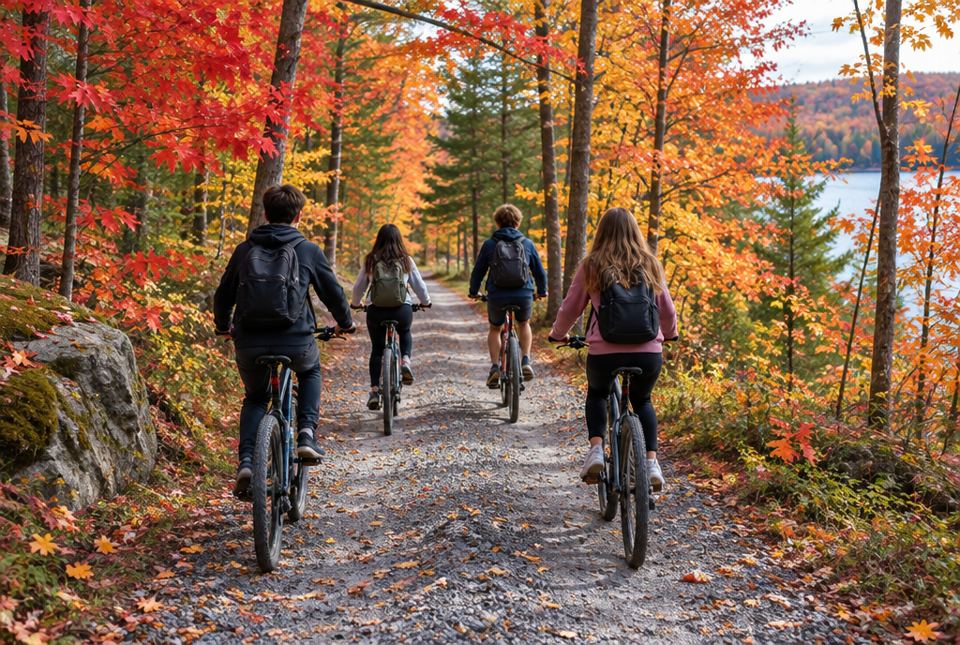 Cycling a trail with friends packs in several things that make activity enjoyable: connection, nature, a little challenge and the freedom to choose your own route. Which of the five reasons would keep you coming back? AI-generated image
What makes an activity enjoyable?
People enjoy activity for different reasons. Here are five common ones. Which matter most to you?
- Choice: you picked it, so it feels like yours.
- Feeling skilled: you can see yourself getting better.
- Challenge: it is hard enough to be interesting, but not so hard you give up.
- Connection: you do it with friends, family, a team or your community.
- Fun and freedom: music, nature, play, creativity, laughing.
When an activity has several of these, you are much more likely to keep doing it. If an activity has none, it is hard to stick with, even if it is "good for you".
| Who or what | Positive influence (example) | Negative influence (example) |
|---|
| Family | Family walks, skating at the outdoor rink on weekends | A family routine of screens every evening |
| Friends | A friend who says, "Come play pickup basketball with us" | Friends who tease people who aren't "sporty" |
| Coaches and teachers | Praise for effort and improvement | Only paying attention to the best players |
| Media and social media | Videos showing people of all ages and abilities enjoying activity | Ads that suggest you need expensive gear or one body type |
| Community | Free drop-in programs, safe trails, lit rinks, accessible facilities | No safe place to play nearby |
| Culture and traditions | Dancing at a family celebration, playing traditional games | Feeling that a sport "isn't for people like me" |
Culture and community
Activity is often part of culture and family life. Many First Nations, Métis and Inuit communities today connect being active with the land, family and culture: for example, paddling and harvesting on the land, traditional games, and dances such as powwow dancing and Métis jigging. Many other cultures in Canada also have dances, games and sports that bring families together.
When you learn about the activities that matter to your own family or to friends from other backgrounds, you add more ways to move, and you build respect for others.
You are an influence too
You may not feel like a role model, but younger siblings, cousins, friends and teammates notice what you do. You can influence others to be active when you:
- Invite: "Want to come shoot some hoops?" A personal invitation works better than a lecture.
- Include: choose games where everyone gets a turn and can succeed. Adapt rules so all skill levels and abilities can join.
- Encourage: praise effort ("Nice hustle!"), not just results.
- Model: take the stairs, walk when you can, show you enjoy it.
- Organize: plan a family walk, a park game or a snowshoe outing.
Influence works best when it is respectful. Pressure, guilt or comments about someone's body push people away from activity.
Encourage, don't pressure
Before you invite someone, think about how they might feel. Someone who is nervous about their skills may say yes to a relaxed game of catch but no to a competitive match. Matching the activity to the person shows empathy and builds a stronger friendship.
Worked exampleLet's plan an invitation that works
Amira (13) wants her grandfather (70) and her cousin Leo (8) to be more active with her on winter weekends. Grandpa likes nature and stories; Leo loves games and gets bored easily. Plan an activity that motivates all three.
- List each person's enjoyment factors. Grandpa: nature, a calm pace, connection. Leo: games, fun, short challenges. Amira: being outside, spending time together.
- Look for overlap. All three enjoy being outdoors together.
- Choose an activity: a snowshoe or winter walk on a trail at a local park or conservation area, at Grandpa's pace.
- Add something for Leo: a scavenger hunt (find animal tracks, a pine cone, a red berry bush, a bird) and a race to the next trail marker.
- Make it easy to say yes: Amira checks the weather, packs warm drinks, and plans a short route with a place to rest. She invites them personally.
A winter trail walk with a scavenger hunt. It matches all three people's enjoyment factors, so they are likely to want to do it again.
Hands-on activityBe the spark: plan and lead an active hour
You need: a notebook, comfortable clothes and running shoes, and one to four people from your family or friends.
Warm up together first (5 to 10 minutes): walk briskly, then march with high knees, arm circles, side steps, and a few gentle jumping jacks.
- Interview each person: "What kinds of activity do you enjoy? What would make it more fun?" Write down their enjoyment factors.
- Plan a 45 to 60 minute active hour that matches the group. Include a warm-up, a main activity, and a cool-down. Ideas: a park game, a hike, a dance party, a backyard obstacle course, a family skate.
- Adapt so everyone can take part: shorter distances, softer balls, more turns, a seated version, or partner jobs.
- Lead the hour. Encourage effort and keep it fun.
- Reflect: Did everyone enjoy it? What would you change next time?
Safety: Choose a space a grown-up agrees is safe and away from traffic. Dress for the weather. Bring water. Anyone who feels pain or dizziness should stop and rest.
Just for funIntrinsic motivation: you play because you love it.
Extrinsic motivation: you play because someone promised pizza afterwards.
Both count, but only one still works when the pizza place is closed.
Your turn
1Name the five common enjoyment factors from this lesson.
Choice, feeling skilled, challenge, connection, and fun and freedom.
2Sort each influence as positive or negative: (a) a coach who praises effort; (b) friends who laugh at people who miss shots; (c) a free drop-in skate at the community centre; (d) ads that say you need expensive shoes to run.
(a) positive, (b) negative, (c) positive, (d) negative.
3Explain the difference between intrinsic and extrinsic motivation, with an example of each.
Intrinsic comes from inside you, e.g. "I love how calm I feel after a run." Extrinsic comes from outside, e.g. "I want a medal" or "My parent will be proud."
4Give one indoor and one outdoor activity you have never tried but would like to.
Answers will vary. Examples: indoor: climbing wall, badminton, martial arts; outdoor: cross-country skiing, paddling, orienteering, disc golf. Any safe, active pair works.
5Your friend says, "I'm terrible at sports, so I just won't go." Write a respectful invitation that might change their mind.
Example: "It's just a fun game, no one's keeping score. Come with me, and we can be partners." Look for an invitation that is friendly, lowers pressure, and offers support.
6Why does an activity with several enjoyment factors last longer in your life than one with none?
Because you want to do it, not just feel you should. Enjoyment keeps you coming back, even when no one is making you.
7Name two ways a community can help people be active.
Examples: free or low-cost programs, safe trails and parks, outdoor rinks, lit paths, accessible buildings and change rooms, equipment loans, public transit to facilities.
More practice: warm-up
Someone whose actions others notice and copy.
2True or false: Only adults can influence other people to be active.
False. Teens influence siblings, friends, teammates and younger kids.
3Name one dance that is part of Métis culture.
Métis jigging (the Red River Jig is a well-known example).
4What does inclusive mean in a game?
Everyone can take part and feels welcome, whatever their skill, body, background or ability.
5Which is a better way to influence someone: a personal invitation or a lecture about health?
More practice: on your own
1Jordan quit hockey because the coach only played the best players. Which enjoyment factors did Jordan lose?
Feeling skilled (no chance to improve), connection (left out) and fun. Jordan might enjoy a house league, pickup games or an outdoor rink with friends, where everyone plays.
2Explain why comments about someone's body push people away from activity.
They make people feel judged and embarrassed, so they avoid places where others can see them. Activity should be about health, fun and skills, not about how a body looks.
3You want your younger brother (7) to play outside instead of on a tablet. Suggest a plan using invite, include, encourage.
Example: Invite: "Want to build a snow fort with me?" Include: let him choose the design or a game. Encourage: "You're a great builder!" Look for a plan that is fun for a 7-year-old and doesn't shame him.
4How can social media be a positive influence on activity? Give two examples.
Examples: videos teaching a new skill, accounts showing people of many ages, sizes and abilities being active, local event posts, challenges with friends that are about fun, not looks.
5Give two reasons why lifelong activities (like walking, cycling, swimming or dancing) are worth learning now.
They need little equipment or none, can be done alone or with others, at any age, and at your own pace, so you can keep enjoying them as an adult.
Challenge
1A school's lunchtime intramurals are only attended by the same 15 athletic students. As a student leader, design two changes that would motivate more students. Explain which enjoyment factor each change targets.
Examples: (1) Add choice: rotate activities each week (dance, low-key games, yoga, ultimate), voted on by students. Targets choice. (2) Make mixed teams with "everyone touches before scoring" rules. Targets connection and feeling skilled. Other strong ideas: a beginners' day, friend-bring-a-friend week, no-score games (fun). Each change should be linked to a factor.
2Your friend says, "My family is too busy to be active." Use the four steps (Name, Brainstorm, Pick, Check) to help them.
Example: Name: no time together on weeknights. Brainstorm: walk after supper for 15 minutes; active chores together (raking leaves, shovelling snow); weekend bike ride; walk to the store instead of driving. Pick: a 15-minute after-supper walk three nights a week. Check: after two weeks, count the walks and adjust.
3Compare how you were influenced to be active when you were 7 with how you are influenced now. Which influences got stronger, and which got weaker? What does that mean for high school?
Answers will vary. Model answer: At 7, parents chose and drove me to activities; now friends and my own choices matter more, and social media is a bigger influence. In high school, I will choose more on my own, so it matters that I find activities I enjoy and friends who are active. Look for a thoughtful comparison and a link to the future.
Quiz
1. Which is an intrinsic motivator?
2. Which is the most respectful way to influence a friend to be active?
3. Which is a negative influence on activity?
4. An activity that is too hard for you is likely to:
5. Which describes an inclusive game?
6. Why do people who enjoy their activities tend to stay active as adults?
Big idea: In Grade 8, students take part in many activities, explain what makes activity enjoyable for them, and identify factors that motivate daily activity, including how people and messages influence others to be active. Students also learn that they can be a positive influence.
How to help at home:
- Ask your child what they enjoy about moving, and offer real choices.
- Let your child plan and lead a family active hour; follow their plan, even if it's not what you would choose.
- Model activity yourself: walk when you can, try new things, talk positively about your own movement.
- Look into free or low-cost local options together (community centres, outdoor rinks, trails, library equipment loans).
Common difficulties:
- Thinking only sports count. Dance, walking, active chores, outdoor play and cultural activities all count.
- Pressuring others. Help your child see the difference between inviting and pushing.
- Comparing bodies. Keep conversations about health, energy and fun, never about appearance or weight.
Social-emotional learning: Finding what keeps them motivated builds positive motivation and perseverance (A1.3). Inviting and including others with empathy builds healthy relationships (A1.4).