D. Structures and Mechanisms · FlightThe Four Forces of Flight
D2.2 A1.5About 40 minutes
Learning goals- I can name the four forces of flight: lift, weight, thrust and drag.
- I can show the direction of each force with an arrow on a diagram.
- I can describe how the forces in each pair relate to each other so that flight is possible.
Words to know
force
A push or a pull. A force has a size and a direction.
lift
The upward force on a wing (or other flying thing) made by air moving past it.
weight
The downward pull of gravity on an object.
thrust
The force that pushes a flying object forward.
drag
The force of air pushing back against an object moving through it. It acts opposite to the direction of motion.
force diagram
A drawing that shows each force on an object as an arrow. The arrow points in the direction of the force; a longer arrow means a bigger force.
A tug-of-war in the sky
Imagine two tug-of-war games at the same time. In one, up pulls against down. In the other, forward pulls against backward. Every plane, bird and bug that flies is in the middle of these two contests all the time.
The four forces of flight are lift, weight, thrust and drag. Today you will learn what each one does and how they work together.
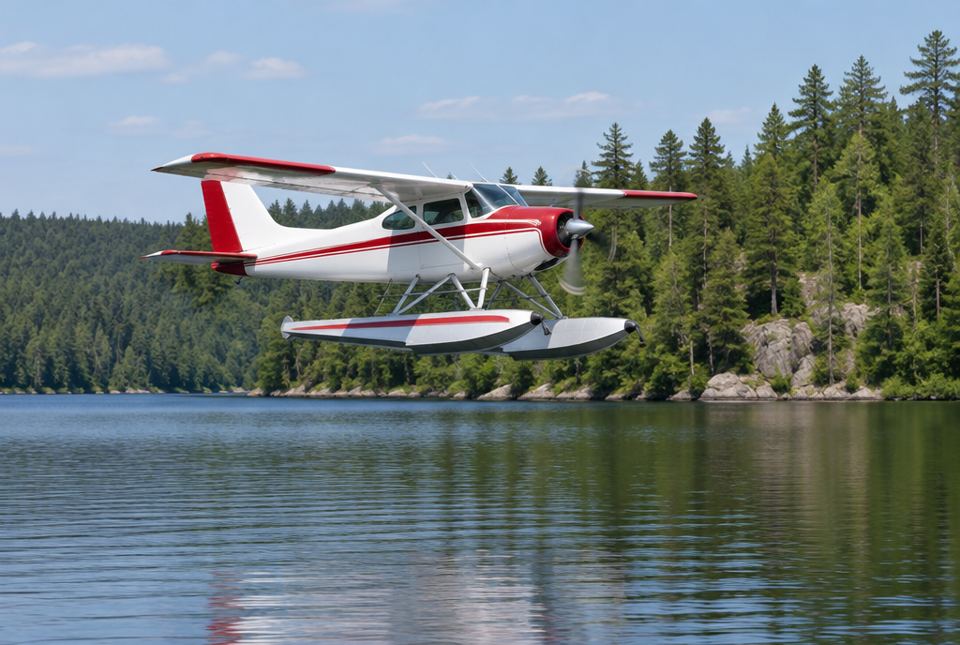 The propeller gives thrust, the wings give lift, gravity pulls the plane's weight down, and the air pushes back with drag. AI-generated image
Remember from Grade 3
A force is a push or a pull. When forces on an object are balanced (equal and opposite), the object's motion does not change. When they are unbalanced, the object starts, stops, speeds up, slows down or changes direction. This idea is the key to flight.
The four forces
- Weight pulls the plane down, toward the centre of the Earth. It is caused by gravity acting on the plane's mass (the plane, the people, the bags and the fuel).
- Lift pushes the plane up. Lift is made mostly by the wings as air moves past them. You will learn exactly how in the next lesson.
- Thrust pushes the plane forward. Engines make thrust. A propeller or a jet engine pushes air backward, and the air pushes the plane forward. A bird makes thrust by flapping.
- Drag pushes backward, against the motion. It is air resistance. Air pushes back on the plane as it moves through it.
The forces come in two pairs that work against each other:
- Lift vs. weight (up vs. down)
- Thrust vs. drag (forward vs. backward)
| Force | Direction | Caused by |
|---|
| lift | up | air moving past the wings |
| weight | down (toward the Earth) | gravity pulling on the plane's mass |
| thrust | forward | engines (propellers or jets), or flapping wings |
| drag | backward (opposite to the motion) | air pushing against the moving plane |
How the forces relate to each other
For something to fly, lift must be able to match weight, and thrust must be able to match drag.
- Steady, level flight (same height, same speed): lift equals weight and thrust equals drag. All four forces are balanced. The plane keeps cruising along. Balanced does not mean stopped!
- Lift bigger than weight: the plane starts to rise.
- Weight bigger than lift: the plane starts to sink.
- Thrust bigger than drag: the plane speeds up.
- Drag bigger than thrust: the plane slows down.
The pairs are also connected. A plane needs speed to make lift, and it needs thrust to get that speed. And the faster it goes, the more drag it feels, so it needs even more thrust.
Drawing force arrows
When you draw a force diagram:
- Draw each force as an arrow starting at the object.
- The arrow points the way the force pushes or pulls: lift up, weight down, thrust forward (the way the plane is going), drag backward.
- Make arrows of equal length for equal forces and a longer arrow for a bigger force.
Worked exampleLet's draw the forces on a glider
A glider is a plane with no engine. It is gliding to the left. Which forces act on it, and which way do the arrows point?
- Weight: gravity still pulls it down.
- Lift: air moving past its long wings pushes it up.
- Drag: it is moving to the left, so drag pushes the opposite way, to the right.
- Thrust: there is no engine, so there is no thrust arrow. A glider gets its forward motion by slowly trading height for speed, like a sled sliding down a gentle hill. That's why a glider always drifts slowly downward unless it finds rising air.
Three arrows: lift up, weight down, drag to the right (opposite to its motion). No thrust.
A glider flying to the left. Drag points the opposite way to the motion, so it points right. There is no thrust arrow, and weight is a little bigger than lift, so the glider slowly sinks as it glides.Worked exampleLet's read the forces and predict
A small plane is flying level. The pilot pushes the throttle forward, so the engine makes more thrust, but drag has not changed yet. What happens?
- Before: thrust = drag, so the plane flew at a steady speed.
- Now thrust is bigger than drag. The forward forces are unbalanced.
- Unbalanced forces change motion, so the plane speeds up.
- As it goes faster, drag grows (and the wings make more lift). Soon drag matches the new thrust and the speed becomes steady again, a little faster than before.
The plane speeds up until drag grows to match the bigger thrust.
Just for funWhy did the airplane get sent to its room?
It had a bad altitude!
Hands-on activityBe the plane: a force diagram you can feel
You need: a toy plane (or a paper airplane, or a pencil to stand for a plane), 4 sticky notes, a marker, and a helper.
- Write lift, weight, thrust and drag on the sticky notes. Stick each note on a wall around the toy plane, on the side the force pushes or pulls. (The plane's nose shows which way is forward.)
- Turn the plane so it faces the other way. Move the thrust and drag notes so they are still correct. Did lift and weight need to move? (No, they stay up and down.)
- Feel drag: hold a large piece of cardboard or a big book flat in front of you and walk quickly across the room (no running, clear the floor first). Then hold it edge-first and walk again. When do you feel more push from the air?
- Draw two force diagrams in your notebook: a plane cruising level at a steady speed (equal arrows in each pair) and a plane speeding up (thrust arrow longer than drag).
What to look for: thrust always points the way the nose faces and drag always points the opposite way; lift up and weight down never change. The cardboard held flat-on feels much more drag than edge-on.
Your turn
1Name the four forces of flight.
Lift, weight, thrust and drag.
2Which force pulls a plane down? What causes it?
Weight, caused by gravity pulling on the plane's mass.
3Which force works against thrust?
4Which force works against weight?
5A plane flies to the right. Which way does the drag arrow point?
To the left (opposite to the motion).
6A plane is cruising at the same height and speed. Compare lift and weight, and thrust and drag.
Lift equals weight and thrust equals drag. The forces are balanced.
7Where does a plane's thrust come from?
From its engines: propellers or jet engines push air backward, and the air pushes the plane forward.
More practice: warm-up
1Which force pushes a plane forward?
2Which force is made mostly by the wings?
3True or false: drag is a kind of air resistance.
4Which way does the weight arrow always point?
5How does a bird make thrust?
More practice: on your own
1A plane's lift becomes smaller than its weight. What happens? Explain.
The plane starts to sink (lose height). The up and down forces are unbalanced, with the downward force bigger.
2Sami says, "When forces are balanced, a plane stops moving." Is Sami correct? Explain.
No. Balanced forces mean the motion does not change, so a cruising plane keeps flying at the same speed in the same direction. It does not stop.
3Why does a plane need thrust to make lift?
Wings make lift only when air moves past them. Thrust gives the plane the speed it needs, so air rushes over the wings.
4A cargo plane is loaded with 10 tonnes of boxes. Which of the four forces gets bigger right away? What must the plane do to fly?
Weight gets bigger. The plane must make more lift to match it, for example by going faster on takeoff (which needs more thrust).
5Draw (or describe) a force diagram of a plane slowing down while flying level.
Lift up and weight down, equal length. Thrust arrow forward and drag arrow backward, with the drag arrow longer than thrust.
Challenge
1A glider has no engine. How can it keep moving forward? Which force pair is missing a partner?
Thrust is missing, so drag has no forward force to balance it. The glider keeps moving by slowly going downhill through the air, trading height for speed (gravity helps keep it moving). It must slowly lose height unless it finds rising air.
2As a plane goes faster, both its lift and its drag get bigger. Why can't a plane just go as fast as possible all the time?
Going faster makes more drag, so the engines must make more thrust, which burns much more fuel. It is also harder to land at high speed. Planes cruise at a speed that balances getting there quickly with using a sensible amount of fuel.
3A plane uses up fuel during a long flight. Which force changes, and what does the pilot need to do to keep flying level?
Weight gets smaller as fuel is burned. If nothing else changed, lift would be bigger than weight and the plane would rise, so the pilot (or autopilot) reduces lift a little (for example by tilting the nose down slightly or flying a bit slower) to keep lift equal to weight.
Quiz
1. Which list names the four forces of flight?
2. Which force pushes a plane forward?
3. A plane is flying to the left. Which way does drag push?
5. What happens if thrust becomes bigger than drag?
6. Which force is caused by gravity?
Big idea (D2.2): students describe the relationships between the four forces of flight. The two pairs work against each other: lift vs. weight and thrust vs. drag. Balanced forces mean steady motion (not "stopped"); unbalanced forces mean a change in speed or direction. Your child met balanced and unbalanced forces in Grade 3.
How to help: Ask your child to draw force arrows on pictures of planes, birds or even a kite from a magazine or picture book. Check that thrust points the way the plane is going and drag points the opposite way. Ask them to explain the diagram out loud using the words balanced and unbalanced (A1.5, communicating).
Common difficulties:
- "Balanced forces means not moving." A cruising plane at 900 km/h has balanced forces. Balanced means no change in motion.
- Drawing drag in the wrong direction. Drag always points opposite to the motion.
- Thinking weight disappears in the air. Gravity always acts; lift has to keep matching it.
- Safety: clear the floor before walking with cardboard; walk, don't run.