B. Life Systems · Human Organ SystemsFood Literacy: Smart Choices for Body and Mind
B1.3 A1.4 A3.2 A1.5About 45 minutes
Learning goals- I can explain what food literacy means.
- I can read a Nutrition Facts table and use % Daily Value to compare foods.
- I can explain how food choices affect my body systems and my mental health.
- I can plan and safely make a healthy snack.
Words to know
food literacy
The knowledge and skills to choose, prepare and enjoy healthy food: where food comes from, how to read labels, how to cook safely, and how food affects you.
Nutrition Facts table
The table on a food package that shows the serving size, calories and nutrients.
% Daily Value (% DV)
Shows if a serving has a little or a lot of a nutrient: 5% or less is a little, 15% or more is a lot.
ingredient list
The list of everything in a food, from the largest amount to the smallest.
highly processed food
Food that has been changed a lot from its natural form, often with added sugar, salt or fat.
country food
Traditional foods that Inuit hunt, fish and gather, such as Arctic char, caribou and seal.
Food is fuel, and more
Every body system you studied depends on food. Your digestive system breaks it into nutrients, your circulatory system carries them, your muscles and brain use them, and your excretory system removes the wastes. Food also affects how you feel, how well you focus and how you connect with family and culture.
Food literacy means knowing how to choose, prepare and enjoy food that helps your body and mind.
Remember from Grade 4 Health
You learned about nutrients and Canada's Food Guide: fill half your plate with vegetables and fruits, a quarter with whole grain foods, a quarter with protein foods, and make water your drink of choice. The Food Guide also gives habits: be mindful of your eating, cook more often, enjoy your food, eat meals with others, use food labels, and be aware of food marketing.
Now you'll use these skills to make decisions, and see how food connects to both physical and mental health.
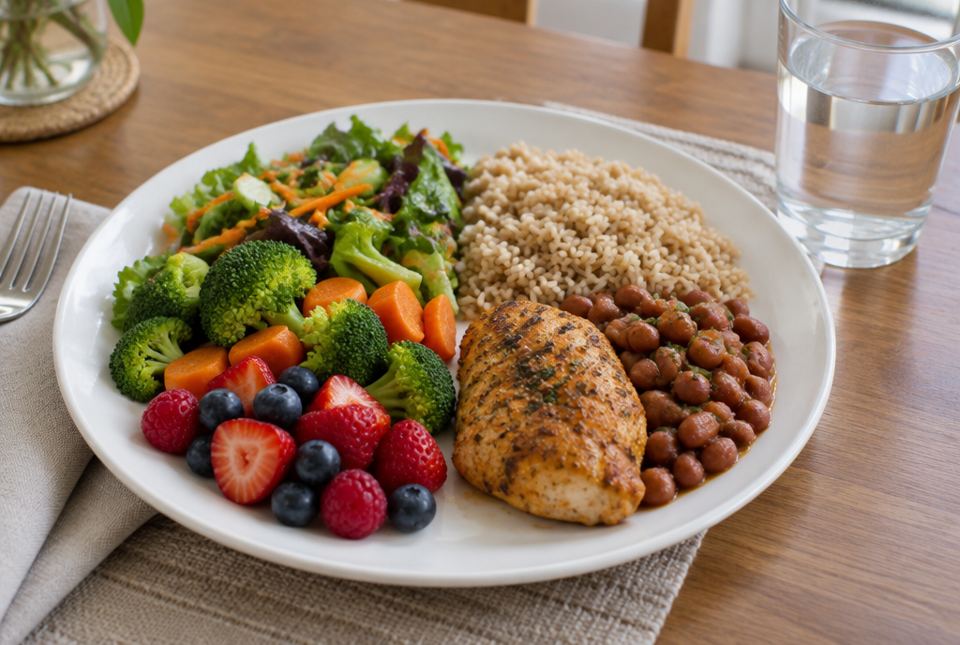 This plate follows Canada's Food Guide: half vegetables and fruits, a quarter whole grains, a quarter protein foods, and water to drink. AI-generated imageCanada's Food Guide plate: half vegetables and fruits, a quarter whole grain foods, a quarter protein foods, and water as the drink of choice.
Food and your body systems
- Vegetables, fruits and whole grains have fibre, which helps the digestive system move food along.
- Protein foods (beans, lentils, nuts, fish, eggs, meat, milk products) help build and repair muscles.
- Calcium (in milk, fortified soy drinks, some leafy greens) helps keep bones strong.
- Iron (in meat, beans, leafy greens) helps red blood cells carry oxygen.
- Water helps the kidneys remove wastes and helps you stay cool.
- Too much salt (sodium) over time can raise blood pressure, which makes the heart work harder.
- Too much added sugar can lead to tooth decay and, over time, other health problems.
Food and your mind
- Regular meals and snacks give your brain steady energy, which helps you focus and stay calm. Feeling "hangry" is real!
- Eating with family and friends helps people feel connected.
- Cooking and sharing cultural and traditional foods connects us to our families and communities.
Reading a Nutrition Facts table
- Serving size: all the numbers are for this amount. If you eat twice as much, you get twice as much of everything.
- % Daily Value (% DV): 5% or less is a little, 15% or more is a lot.
- Look for more of: fibre, calcium, iron, potassium. Look for less of: sodium, sugars, saturated fat.
- Ingredient list: ingredients are listed from most to least. If sugar is first, the food has more sugar than anything else.
Highly processed foods often have more sodium, sugars or saturated fat. The Food Guide suggests limiting them.
Canada's rules now require many packaged foods that are high in sodium, sugars or saturated fat to show a "High in" symbol with a magnifying glass on the front of the package.
| Per 1 cup (serving) | Cereal A | Cereal B |
|---|
| Sugars % DV | 4% | 20% |
| Fibre % DV | 18% | 3% |
| Sodium % DV | 6% | 8% |
| Iron % DV | 25% | 10% |
| first ingredient | whole grain oats | sugar |
Worked exampleLet's compare two cereals
Which cereal is the healthier everyday choice, and why?
- Sugars: A has 4% (a little). B has 20% (a lot, more than 15%).
- Fibre: A has 18% (a lot). B has 3% (a little).
- Iron: A has 25% (a lot). B has 10%.
- Sodium: both are low to medium; A is a little lower.
- Ingredients: A's first ingredient is whole grain oats. B's first ingredient is sugar.
Cereal A is the healthier everyday choice: less sugar, much more fibre and iron, and whole grains first. Cereal B would likely need a front-of-package "High in sugars" symbol.
Food, culture and community
Food traditions are part of who we are. Many First Nations, Métis and Inuit families harvest and share traditional foods, such as fish, wild game, berries and wild rice. Inuit call traditional foods like Arctic char, caribou and seal country food. Hunting, fishing and gathering are active, connect people to the land, and sharing the harvest strengthens community.
In your family, think about which foods you share at holidays such as Thanksgiving, Lunar New Year, Eid, Diwali or Hanukkah, and who taught you to make them.
Kitchen safety
Wash your hands with soap for 20 seconds before cooking. Wash fruits and vegetables. Keep raw meat away from other foods. A grown-up handles knives, the stove and the oven. Put cold foods back in the fridge quickly.
Just for funWhy did the banana go to the doctor?
It wasn't peeling well. (Luckily, bananas come in their own wrapper, and you can compost it!)
Hands-on activityPlan, check and make a healthy snack
You need: a grown-up, clean hands, and ingredients such as plain yogurt, berries (fresh or frozen) and oats, or whole grain crackers, cheese and cucumber.
- Plan: choose a snack that has foods from at least two parts of the Food Guide plate.
- Check labels: find the % DV of sugars and fibre on one packaged ingredient. Is it a little or a lot?
- Compare: find a sweetened yogurt label and a plain yogurt label (if you have them). Which has less sugar?
- Make it safely: wash hands, rinse the fruit or vegetables. A grown-up does any cutting.
- Enjoy it with someone, and talk about how the snack helps your body systems: Which nutrients? Which organs use them?
Grown-up notes: check for allergies before choosing ingredients; you handle knives. Whole nuts and whole grapes can be a choking risk for young siblings.
Your turn
1What does food literacy mean?
Knowing how to choose, prepare and enjoy healthy food, including reading labels, cooking safely and understanding how food affects you.
2On a Nutrition Facts table, what % DV means "a lot"?
3A snack has 3% DV sodium. Is that a little or a lot?
4Which nutrient helps red blood cells carry oxygen?
5How does drinking water help the excretory system?
Water helps the kidneys remove wastes in urine.
6Give one way food affects mental health.
Any one: regular meals give the brain steady energy to focus; eating with others helps you feel connected; sharing cultural foods builds belonging.
More practice: warm-up
1What fraction of your plate should be vegetables and fruits?
2What is the Food Guide's drink of choice?
3In an ingredient list, which ingredient is there the most of?
4Who should handle knives in the kitchen?
5What do Inuit call traditional foods such as Arctic char and caribou?
More practice: on your own
1A granola bar has 18% DV sugars and 2% DV fibre. Assess it.
A lot of sugar (18% is more than 15%) and a little fibre (2%). It is better as a sometimes snack than an everyday one.
2You eat 2 servings of a cracker that has 8% DV sodium per serving. What % DV sodium did you eat?
8% × 2 = 16%, which is a lot.
3Why might too much sodium affect the circulatory system?
Over time it can raise blood pressure, making the heart work harder.
4Why is it harder to buy fresh food in some northern communities, and how do traditional foods help?
Food is flown in, so it costs more and may not be fresh. Country food and traditional foods harvested locally are nutritious and shared within the community.
5Why should you wash your hands before cooking?
To remove germs that could get into the food and make people sick.
Challenge
1An ad shows a cartoon hero eating Cereal B and says "Power up!" Use food literacy to respond.
The ad is marketing to kids. The label shows Cereal B has 20% DV sugars (a lot) and only 3% fibre, and sugar is the first ingredient. A cartoon doesn't make it healthy. Cereal A is the better everyday choice.
2Plan a school lunch that helps at least three body systems. Name each food and the system it helps.
Example: whole grain wrap (fibre → digestive), chicken or beans (protein → muscles), milk or fortified soy drink (calcium → bones), carrots and an apple (fibre, vitamins), water (kidneys). Any plan with correct links.
3Explain how skipping breakfast could affect both your body and your mind at school.
Body: less energy for muscles; you may feel tired or get a headache. Mind: the brain has less fuel, so it's harder to focus, and you might feel grumpy ("hangry").
Quiz
1. On a Nutrition Facts table, 5% DV or less means...
2. A food with sugar as the first ingredient has...
3. Which nutrient helps keep bones strong?
4. Which is a Food Guide healthy eating habit?
5. Which is the safest kitchen plan for a Grade 5 student?
6. Too much sodium over time can affect the...
Big idea: food literacy is the knowledge and skills to make food decisions that support physical and mental health: reading labels, planning, preparing food safely, and understanding culture and marketing.
How to help at home:
- Read Nutrition Facts tables together on things you already have; use the 5%/15% rule.
- Let your child plan and make one snack or meal a week, with you handling knives and heat.
- Share your family's food traditions and stories.
Common difficulties:
- Ignoring the serving size: two servings means double the % DV.
- Labelling foods "good" or "bad". Keep the language about everyday and sometimes foods, and avoid talk about body size or dieting.
Safety: check allergies; supervise knives and heat; watch choking risks for younger siblings.