B. Life Systems · Habitats and CommunitiesPeople and Habitats: Weighing the Impacts
B1.1 A3.3 A3.1 A2.2 A1.1About 40 minutes
Learning goals- I can describe harmful and helpful impacts of human activities on habitats and communities.
- I can look at a habitat decision from different people's perspectives.
- I can describe how First Nations, Métis and Inuit knowledge helps care for habitats.
- I can describe how new technologies and different jobs help protect habitats.
Words to know
impact
The effect that something has. An impact can be helpful (positive) or harmful (negative).
perspective
The way a person sees a situation, based on their needs, experiences and values.
habitat loss
When a habitat is destroyed or changed so much that organisms can no longer live there.
pollution
Harmful materials, like garbage, chemicals or too much salt, getting into air, water or soil.
native species
A species that has lived naturally in an area for a very long time.
conservation
Protecting and caring for nature so it lasts into the future.
The field behind the school
Behind a school there is a big field with tall grass, milkweed and a small wetland. Red-winged blackbirds nest in the cattails. Monarch butterflies visit the milkweed. Frogs sing there every spring.
The town wants to build new houses on the field. Families need homes. But what will happen to the blackbirds, monarchs and frogs?
Questions like this happen in real Ontario communities. Human activities can harm habitats, and they can also help them.
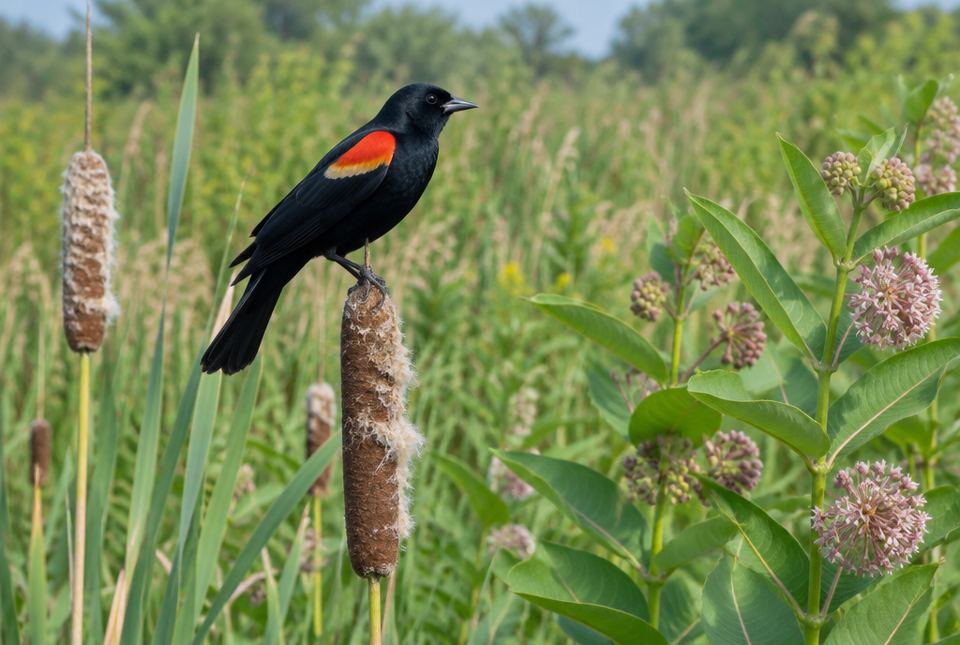 Red-winged blackbirds nest in cattails, and monarchs need milkweed. A field like this is a habitat that people can protect or destroy. AI-generated image
Harmful (negative) impacts
- Habitat loss: clearing forests, draining wetlands and paving fields for roads, houses and parking lots. This is one of the biggest threats to plants and animals.
- Pollution: litter and plastic, chemicals, oil, and road salt washing into streams and ponds.
- Roads: cut habitats into pieces. Turtles, frogs and snakes are often hit by cars when they cross to reach ponds or nesting spots.
- Spreading invasive species: for example, moving firewood can carry the emerald ash borer to new forests.
- Taking too much: catching too many fish or picking too many wild plants.
Helpful (positive) impacts
- Protecting land in parks and conservation areas.
- Restoring habitats: replanting forests, rebuilding wetlands, planting native species like milkweed and wildflowers for pollinators.
- Wildlife crossings: tunnels and fences that guide turtles and other animals safely under roads.
- Clean-ups along shorelines, rivers and ravines.
- Rules that limit how many fish can be caught, and laws that protect species at risk.
Different perspectives
When people decide what to do with land, they often disagree, because each person has a different perspective. A good decision listens to many perspectives.
For the field behind the school:
- A family looking for a home says: "We need a place to live near the school."
- A builder says: "This project gives people jobs and homes."
- A wildlife biologist says: "This wetland is home to frogs and nesting birds. Losing it would harm the whole community."
- A student says: "We learn about nature in this field. It is part of our school."
- A First Nations Elder from the area might say that the land, water, plants and animals are relatives that people have a responsibility to care for, now and for future generations.
A possible plan that respects many perspectives: build fewer houses on the part of the field that is already disturbed, protect the wetland, and plant native milkweed along the edges.
First Nations, Métis and Inuit knowledge
First Nations, Métis and Inuit communities have cared for the lands and waters of what is now Canada for thousands of years, and they continue to do so today. Their knowledge comes from careful observation passed down over many generations.
- Many Indigenous teachings speak about respect for all living things, taking only what you need, and giving back.
- The Haudenosaunee share a teaching often called the Seventh Generation principle: think about how decisions today will affect people seven generations into the future.
- Two-Eyed Seeing is an idea shared by Mi'kmaw Elder Albert Marshall: look at the world with the strengths of Indigenous knowledge with one eye and the strengths of Western science with the other, and use both eyes together.
- In many places in Canada, Indigenous Guardians programs have community members watch over the land and water, track wildlife and test water quality.
- Inuit hunters' detailed knowledge of sea ice, weather and animals like polar bears and caribou is shared with scientists studying the Arctic.
Worked exampleLet's weigh an impact from different perspectives
A cottage owner wants to clear all the plants and logs from her lakeshore to make a sandy beach. Look at it from three perspectives.
- Cottage owner: "A beach would be nice for swimming with my grandchildren."
- Fish and frogs (through a biologist's eyes): shoreline plants and fallen logs give shelter, shade and places to lay eggs. Removing them is habitat loss.
- Neighbours downstream: plant roots hold soil in place. Without them, soil can wash into the lake and make the water murky.
- A balanced idea: keep most of the natural shoreline and clear only a small path to the water.
Listening to several perspectives leads to a choice that meets people's needs and protects the habitat.
Technology and careers that help
New technologies help people understand and protect habitats:
- Trail cameras take pictures when an animal walks by, so scientists learn which animals use an area without disturbing them.
- Drones can count birds or check a wetland from the air (but they must be flown carefully so they do not frighten wildlife).
- GPS tracking collars show where animals like caribou or wolves travel.
- Apps let ordinary people, even kids, photograph and report plants and animals they find. Scientists use these reports to learn where species live.
Careers: wildlife biologists, conservation officers, park wardens, ecologists, and skilled trades such as landscape horticulturists (who plant and restore native gardens), arborists (who care for trees) and heavy equipment operators (who help build wildlife crossings).
Just for funTrail cameras snap a picture whenever something moves. Scientists who check them often find surprise photos, like a curious raccoon peering right into the lens!
Hands-on activityHabitat impact walk
You need: a clipboard or notebook, a pencil, a grown-up.
- Walk around your neighbourhood or a park. Make a T-chart: Helpful impacts | Harmful impacts.
- Record what you see: litter, a pollinator garden, a new building, a bird house, a storm drain, planted trees, a fenced-off natural area.
- For one harmful impact, imagine three perspectives (for example: a resident, a business owner, a squirrel or a bird). What would each one say?
- Suggest one action your family could take to add a helpful impact, such as planting a native flower, picking up litter safely, or making a bird bath.
- Present your T-chart and action idea to your family.
Grown-up note (safety): Stay together near roads. If you pick up litter, wear gloves and let the adult handle anything sharp, like glass or needles, or report it instead. Wash hands afterward.
Your turn
1Give two harmful impacts of human activities on habitats.
Any two: habitat loss (clearing, paving, draining wetlands), pollution, roads, spreading invasive species, taking too much.
2Give two helpful impacts.
Any two: parks and conservation areas, restoring habitats, planting native species, wildlife crossings, clean-ups, rules that protect wildlife.
The way a person sees a situation, based on their needs, experiences and values.
4Why is it important to listen to different perspectives before deciding what to do with land?
Different people (and the land and animals) are affected in different ways. Listening helps find a fair choice that meets needs and protects habitats.
5What does the Seventh Generation principle ask people to think about?
How decisions made today will affect people seven generations in the future.
6Name one technology that helps scientists study wildlife.
Any one: trail cameras, drones, GPS tracking collars, apps for reporting sightings, satellite images.
7Why shouldn't people move firewood long distances?
It can carry invasive insects like the emerald ash borer to new forests.
More practice: warm-up
1Is planting milkweed for monarchs a helpful or harmful impact?
2Is dumping garbage in a ravine helpful or harmful?
3What is a native species?
A species that has lived naturally in an area for a very long time.
4What does a trail camera do?
Takes pictures when an animal walks by.
5Name one job that helps protect habitats.
Examples: wildlife biologist, conservation officer, park warden, landscape horticulturist, arborist.
More practice: on your own
1How do roads harm turtles? How can people help?
Turtles cross roads to reach ponds and nesting spots and are hit by cars. People can build wildlife crossings (tunnels with fences), put up turtle crossing signs and slow down.
2Explain Two-Eyed Seeing in your own words.
Using both Indigenous knowledge and Western science together, like using two eyes to see better.
3A company wants to build a road through a forest. Give one perspective that supports the road and one that is worried about it.
Supports: people who need a faster, safer way to travel or to get goods to stores. Worried: a biologist or a nearby community worried about habitat loss, animals being hit, and pollution.
4How can apps where people report sightings help scientists?
Many people send in photos from many places, so scientists learn where species live and whether they are increasing or decreasing.
5Road salt keeps winter roads safe. Why can it also be a problem for habitats?
It washes into streams, ponds and soil and can harm fish, frogs, insects and plants that need fresh water.
Challenge
1Drones help count birds, but they can also frighten wildlife. Describe one helpful and one harmful impact of this technology, and one rule that could reduce the harm.
Helpful: counts birds quickly without people walking through nests. Harmful: noise can scare birds off their nests. Rule: fly high, keep a distance and avoid nesting season.
2For the field behind the school, write a plan that respects at least three perspectives.
Example: build homes on the part of the field near the road (families, builder), protect the wetland and a strip of meadow (biologist, wildlife), make a trail and outdoor classroom (students), and invite local First Nations community members to share knowledge about caring for the land.
3Why might Inuit hunters notice changes in the Arctic before some scientists do?
They spend a great deal of time on the land and sea ice, and their communities have passed down knowledge over many generations, so they know what is normal and notice changes quickly.
Quiz
1. Which is a harmful impact on habitats?
3. Which is a helpful impact?
4. The Seventh Generation principle, shared by the Haudenosaunee, asks people to...
5. Which technology shows where a caribou travels?
6. Why is moving firewood long distances a problem?
7. Two-Eyed Seeing, shared by Elder Albert Marshall, means...
This lesson asks children to weigh helpful and harmful human impacts and to consider different perspectives, including First Nations, Métis and Inuit perspectives.
Common difficulties:
- Seeing every human activity as "bad". Point out that people need homes and roads, and many people work to protect habitats; the goal is balance.
- Speaking about Indigenous peoples only in the past. First Nations, Métis and Inuit communities are living communities today, and many lead conservation work now.
Safety: On an impact walk, stay together near roads, wear gloves for litter, and let an adult handle or report sharp objects such as glass or needles.
At home: Talk about a local news story about land use and ask, "Whose perspectives are being heard?"