B. Foundations of Language · Printing, Spelling and SentencesAdjectives That Compare, and Adverbs
B3.2 B2.3About 35 minutes
Learning goals- I can use -er or more to compare two things.
- I can use -est or most to compare three or more things.
- I know special ones: good, better, best and bad, worse, worst.
- I can find an adverb and the word it tells about.
Words to know
adjective
A word that describes a noun: tall tree, cold day.
comparative adjective
An adjective that compares two things: taller, more careful.
superlative adjective
An adjective that compares three or more things and picks the most: tallest, most careful.
adverb
A word that tells how, when or where something happens: quickly, today, outside.
Remember from Grade 1
An adjective describes a noun: a tall tree, a cold day.
An adverb tells about an action: She ran quickly.
In Grade 2 you'll use adjectives to compare, and find which word an adverb tells about.
-er and -est
To compare two things, add -er: My sled is faster than yours.
To compare three or more, add -est: Her sled is the fastest of all.
Remember the spelling changes from the endings lesson:
- Double: big → bigger → biggest
- Drop the e: nice → nicer → nicest
- y to i: happy → happier → happiest
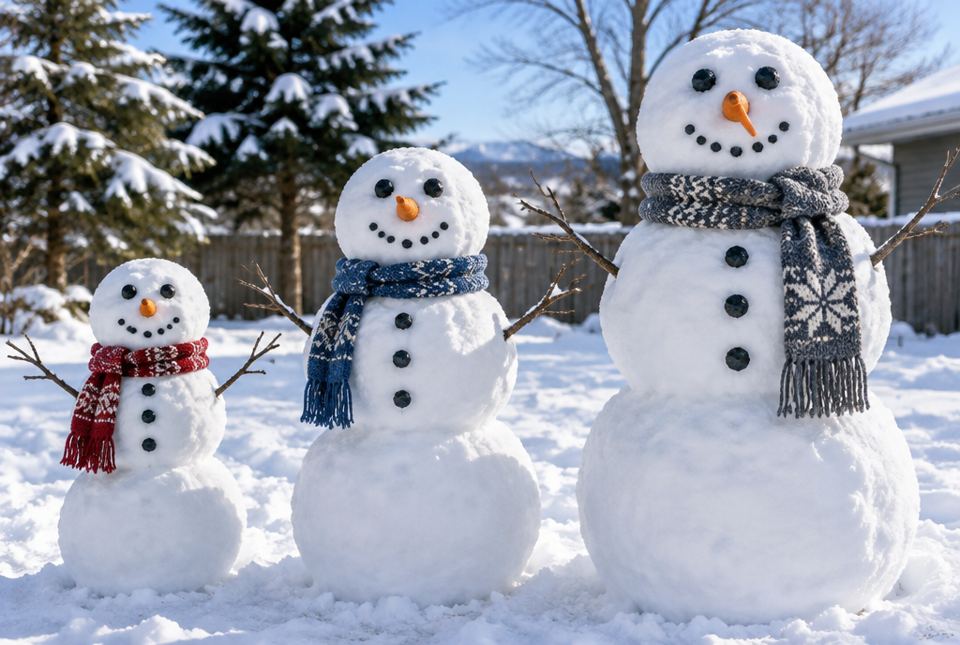 The snowman on the left is big, the middle one is bigger, and the one on the right is the biggest of all. Use -er to compare two things and -est for three or more. AI-generated image
More and most
For many long adjectives, we don't add -er or -est. We use more and most instead:
- beautiful → more beautiful → most beautiful
- careful → more careful → most careful
Never use both! Say bigger, not ~~more bigger~~.
| Adjective | Comparing 2 | Comparing 3 or more |
|---|
| cold | colder | coldest |
| big | bigger | biggest |
| funny | funnier | funniest |
| exciting | more exciting | most exciting |
| good | better | best |
| bad | worse | worst |
Worked exampleLet's compare
Fill in the blanks with forms of long: A pencil is ___ than a crayon. A ruler is the ___ of the three.
- The first sentence compares two things (pencil and crayon) and has the word than. Use -er: longer.
- The second sentence picks the most out of three. Use -est: longest.
A pencil is longer than a crayon. A ruler is the longest of the three.
Just for funLittle kids sometimes say gooder and goodest. It sounds silly, but it shows they know the -er and -est pattern! Now you know the special words: better and best. 😉
Adverbs: which word do they tell about?
An adverb usually tells about a verb (an action). It answers:
- How? The runner finished quickly. (How did she finish? quickly)
- When? We will skate tomorrow. (When will we skate? tomorrow)
- Where? The kids played outside. (Where did they play? outside)
To find what an adverb tells about, ask: How did they ___? When? Where?
Some adverbs tell about describing words instead: It is very cold. (very tells how cold.)
Worked exampleLet's find the adverb
The bear walked slowly. Find the adverb and the word it tells about.
- What is the action? walked.
- Ask: How did the bear walk? slowly.
- So slowly is the adverb. It tells about the verb walked.
Adverb: slowly. It tells about walked.
Hands-on activityLine it up!
You need: 3 or more things from around the house (spoons, shoes, stuffed animals), paper and a pencil.
- Pick 3 shoes. Line them up from smallest to biggest.
- Say sentences: This shoe is small. This one is bigger. This one is the biggest.
- Try other adjectives: heavy, heavier, heaviest (hold them!), soft, softer, softest.
- Adverb charades: a grown-up writes adverbs on slips: slowly, quickly, loudly, quietly, sadly, happily. Pick one and walk across the room that way. Your grown-up guesses the adverb!
Your turn
1Fill in with a form of fast: A car is ___ than a bike.
faster. Comparing two things.
2Fill in with a form of tall: Dad is the ___ person in my family.
tallest. Comparing three or more.
4Which is right: more happy or happier?
happier. Short words like happy change y to i and add -er.
5Fill in: My drawing is good, but yours is ___.
6Find the adverb: The baby slept quietly.
quietly. It tells how the baby slept.
7Find the adverb: We went to the library yesterday.
yesterday. It tells when we went.
More practice: warm-up
3Which compares two things: taller or tallest?
4What comes after good, better...?
5Is loudly an adjective or an adverb?
An adverb. It tells how something is done.
More practice: on your own
1Fill in with a form of funny: That was the ___ joke I ever heard!
funniest. Change y to i, add -est. It means the most funny of all.
2Fill in with a form of beautiful: The sunset was ___ than the sunrise.
more beautiful. Long adjectives use more.
3Fix it: My cold is badder today.
My cold is worse today. bad is special: bad, worse, worst.
4Which word does the adverb tell about? The puppy barked loudly.
barked. loudly tells how the puppy barked.
5Fill in with a form of nice: This is the ___ day of the week.
nicest. Drop the e, add -est.
Challenge
1Write 3 sentences comparing 3 animals using big, bigger, biggest.
Answers will vary. Example: A cat is big. A horse is bigger than a cat. A moose is the biggest of the three.
2Fix it: This is the most biggest snowman!
This is the biggest snowman! Use -est or most, never both.
3In It was very windy outside, find two adverbs and what each tells about.
very tells about windy (how windy). outside tells where it was windy.
Quiz
1. Which word compares two things?
2. Fill in: Of all the kids, Ava is the ___.
4. Fill in: My cookie is good, but Gran's are the ___.
6. In Tom whispered softly, which word does softly tell about?
Big idea: Grade 2 students learn the function of comparative and superlative adjectives and recognize the words that adverbs modify (B3.2). Adding -er and -est also practises suffix spelling changes (B2.3).
How to help at home:
- Compare things during the day: "Which apple is bigger? Which is the biggest?"
- When reading, stop at an adverb and ask "How (or when, or where) did they do it?"
- Play adverb charades: act out slowly, loudly, sadly.
Common difficulties:
- Doubling up (more bigger, most biggest). Remind them: -er OR more, never both.
- Gooder, badder. Practise the special forms: good, better, best and bad, worse, worst.
- Spelling changes (bigest, happyer). Link back to the endings lesson.
- Using -er when comparing more than two (the taller of all my friends). Count how many things are being compared.