C. Algebra · Patterns, Equality and CodingPatterns Around Us
C1.1About 30 minutes
Learning goals- I can tell what a pattern is.
- I can find patterns in my home, at school and outside.
- I can find the core (the part that repeats) in a pattern.
- I can describe a pattern using words like repeats, core and next.
Words to know
pattern
Things arranged in a way that follows a rule, so you can tell what comes next.
repeating pattern
A pattern where the same part happens again and again.
core
The smallest part of a repeating pattern that repeats over and over.
design
A picture or decoration made with shapes, lines and colours.
describe
To tell about something using words.
Let's go on a pattern hunt!
Look at a striped shirt. Stripe, stripe, stripe. Look at a fence. Post, gap, post, gap. Look at a quilt or a tiled floor. Square, square, square, in neat rows.
You are looking at patterns! Patterns are everywhere around us. Today you will become a pattern detective.
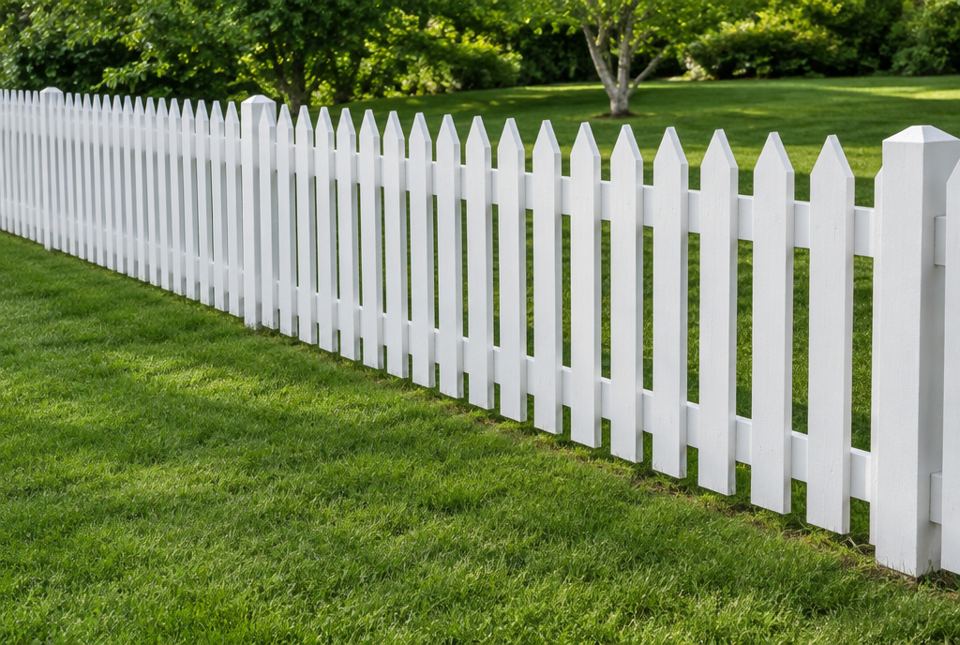 A picket fence is a real-life pattern: board, gap, board, gap. What comes next? AI-generated image
What is a pattern?
A pattern follows a rule. Because it follows a rule, you can tell what comes next.
Here is a pattern made with pictures:
🍁 ⛄ 🍁 ⛄ 🍁 ⛄ 🍁 ⛄
A maple leaf, then a snowman. A maple leaf, then a snowman. It happens again and again. We say it repeats.
A pattern that repeats is called a repeating pattern.
Remember
A pattern has a rule. If something is just mixed up, like 🍁 ⛄ ⛄ 🍁 🍁 🍁 ⛄, it is not a pattern, because there is no rule that tells you what comes next.
The core: the part that repeats
Every repeating pattern has a core. The core is the smallest part that repeats.
🍁 ⛄ | 🍁 ⛄ | 🍁 ⛄ | 🍁 ⛄
The core is 🍁 ⛄. It repeats 4 times.
Some cores are longer:
🔴 🔴 🔵 | 🔴 🔴 🔵 | 🔴 🔴 🔵
The core is 🔴 🔴 🔵. It has 3 parts. It repeats 3 times.
Patterns in designs
People use patterns to make things beautiful. Look for patterns in:
- Quilts and blankets: squares and triangles placed in a repeating way.
- Tiles on a kitchen or bathroom floor.
- Beadwork: many First Nations, Métis and Inuit artists create beautiful beadwork with repeating colours and shapes on moccasins, bags and clothing.
- Wrapping paper and wallpaper.
- Brick walls and fences.
- Hockey jerseys with stripes on the sleeves.
Patterns are also in nature: the stripes on a bee, the scales on a pine cone, and the six arms of a snowflake.
Patterns that turn
Some patterns repeat by turning. Look at these arrows. Each arrow turns a little more, like the hands of a clock, until it is back where it started. Then the turning starts again.
Worked exampleBe a pattern detective
Mia sees this pattern on her quilt:
🟥 🔺 🔺 🟥 🔺 🔺 🟥 🔺 🔺
Describe the pattern. What is the core?
- Look at the first thing: a square 🟥.
- Keep going until you see the square again: square, triangle, triangle, then square again.
- So the part before the second square is: 🟥 🔺 🔺. That might be the core.
- Check it! Does 🟥 🔺 🔺 happen again? Yes: 🟥 🔺 🔺 | 🟥 🔺 🔺 | 🟥 🔺 🔺. It repeats 3 times.
- Say it out loud: square, triangle, triangle, square, triangle, triangle...
It is a repeating pattern. The core is square, triangle, triangle. It repeats 3 times.
Worked exampleIs it a pattern?
Is this a pattern? 🐻 🐻 🐟 🐻 🐟 🐟 🐻
- Try to find a part that repeats. Start: 🐻 🐻 🐟.
- Does 🐻 🐻 🐟 come again next? The next three are 🐻 🐟 🐟. That is different.
- Try a shorter core, 🐻 🐟? The pictures go 🐻 🐻 🐟, so that does not work either.
- No part repeats the same way each time.
No, this is not a pattern. There is no rule that repeats, so we cannot tell what comes next.
Your turn
1What is the core? 🍎 🍌 🍎 🍌 🍎 🍌
2What is the core? ⭐ ⭐ 🌙 ⭐ ⭐ 🌙 ⭐ ⭐ 🌙
⭐ ⭐ 🌙 (star, star, moon). It repeats 3 times.
3How many times does the core repeat? 🔵 🟡 🔴 🔵 🟡 🔴
The core is 🔵 🟡 🔴. It repeats 2 times.
4Is this a pattern? 🐶 🐱 🐱 🐱 🐶 🐶
No. There is no part that repeats the same way each time.
5A fence goes: tall post, short post, tall post, short post. What comes next?
6Name 3 places in your home where you can see a pattern.
Many answers are correct, for example: a striped towel, the floor tiles, a plaid shirt, a brick wall, a window with squares, a keyboard, a ladder or stairs.
Just for funBees are pattern makers! A honeycomb is made of six-sided rooms that repeat over and over, and the bees never needed a ruler.
Hands-on activityPattern hunt at home
- Walk around your home with a grown-up.
- Find 5 patterns. Look at clothes, blankets, floors, dishes, books, toys and the view out the window.
- For each one, point to the core and say it out loud, like "stripe, white, stripe, white."
- Draw your favourite pattern on paper. Colour it in.
- Bonus: go outside and look for a pattern in nature, like the bark on a tree, a pine cone or a row of houses.
Math talk
Ask: How do you know it is a pattern? What part repeats? What would come next? Explaining your thinking is a big part of math!
More practice: warm-up
1What is the core? 🐟 🐻 🐟 🐻 🐟 🐻 🐟 🐻
🐟 🐻 (fish, bear). It repeats 4 times.
2Fill in the blank: The smallest part of a repeating pattern that repeats again and again is called the ___.
3A hockey jersey sleeve has stripes: red, white, red, white, red, ___. What comes next?
White. The stripes take turns: red, white, red, white.
4How many times does the core repeat? 🌲 🍄 | 🌲 🍄 | 🌲 🍄
3 times. The core is 🌲 🍄.
5True or false? 🍁 🍁 🍁 🍁 🍁 ⛄ is a repeating pattern.
False. Nothing repeats. There are 5 leaves and then 1 snowman, so there is no core that happens again.
More practice: on your own
1What is the core? How many times does it repeat? 🟦 🟦 🟨 🟦 🟦 🟨 🟦 🟦 🟨
The core is 🟦 🟦 🟨 (blue, blue, yellow). It repeats 3 times. I found it by looking for where blue, blue, yellow starts again.
2Which one is not a pattern?
- A: 🐸 🐞 🐸 🐞 🐸 🐞
- B: 🐸 🐞 🐞 🐸 🐸 🐸 🐞
- C: 🐞 🐞 🐸 🐞 🐞 🐸
B is not a pattern. No part repeats the same way each time. A has the core 🐸 🐞 and C has the core 🐞 🐞 🐸.
3Look at this beaded bracelet: 🔴 🟡 ⚪ 🔴 🟡 ⚪ 🔴 🟡 ⚪ 🔴 🟡 ⚪
How many beads are in the core? How many beads are there in all?
The core is 🔴 🟡 ⚪, so it has 3 beads. The core repeats 4 times, so there are 12 beads in all (3, 6, 9, 12).
4This pattern turns. What comes next? ⬆️ ➡️ ⬇️ ⬅️ ⬆️ ➡️ ⬇️ ___
⬅️ (left). The arrow turns a little more each time, like a clock hand: up, right, down, left. Then it starts again.
5Describe this pattern using the words core and repeats: ⭐ 🌙 🌙 ⭐ 🌙 🌙
The core is star, moon, moon. It repeats 2 times. The core has 3 parts.
Challenge
1Find the mistake! Leo says the core of this pattern is 🍎 🍌.
🍎 🍎 🍌 🍎 🍎 🍌 🍎 🍎 🍌
Is Leo right? How do you know?
No. If the core were 🍎 🍌, the pattern would go 🍎 🍌 🍎 🍌. But this pattern has two apples before each banana. The core is 🍎 🍎 🍌, and it repeats 3 times.
2A fence goes: tall post, short post, short post, tall post, short post, short post. The core repeats 4 times in all. How many short posts are there? Explain.
8 short posts. Each core (tall, short, short) has 2 short posts. 4 cores: 2 + 2 + 2 + 2 = 8. (There are 4 tall posts, so 12 posts in all.)
3Ella's tile floor should be a pattern, but one tile is wrong. Which tile is it? How do you know?
⬛ ⬜ ⬛ ⬜ ⬛ ⬛ ⬛ ⬜
The 6th tile is wrong. The core is ⬛ ⬜ (black, white), so the tiles take turns. After the 5th tile (black) should come white ⬜. With that fix the floor goes ⬛ ⬜ ⬛ ⬜ ⬛ ⬜ ⬛ ⬜.
Quiz
2. What is the core of this pattern? 🍁 🍁 ⛄ 🍁 🍁 ⛄
3. Which one is a repeating pattern?
4. Where might you see a pattern?
5. How many times does the core repeat? 🌲 🌲 🍄 🌲 🌲 🍄
6. What is the core of a pattern?
This lesson builds the idea that a pattern has a rule, and that in a repeating pattern the rule is a core that repeats.
Common mistakes
- Calling anything with two colours a pattern. Ask: What repeats? Can you show me where it starts again?
- Naming the whole line as the core. Help your child find the smallest part that repeats by covering the rest with a hand.
- Saying the core is 🍁 ⛄ when it is really 🍁 🍁 ⛄. Encourage your child to say the pattern aloud; the rhythm makes the core easier to hear.
How to help
- Point out patterns during daily life: socks, tiles, music, sidewalk cracks, beadwork at a museum or powwow, holiday decorations.
- Use the words pattern, repeat and core often.
- Praise careful looking and explaining, not just quick answers.